
Economic Development, Demography - General & Miscellaneous, Economic History - General & Miscellaneous
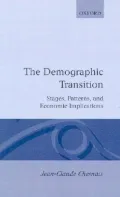
The Demographic Transition: Stages, Patterns, and Economic Implications
Jean-Claude Chesnais, Elizabeth Kreager (Translator), Philip Kreager
Available on Bookshop
Write a review
Books.org participates in affiliate programs including Bookshop.org and the Amazon Services LLC Associates Program. We may earn a commission from qualifying purchases made through links on this page, at no additional cost to you.
Log in to track your reading progress.
Overview
Demographic transition constitutes one of the most fundamental modern historical changes; people live much longer, have fewer children, and experience higher mobility. This book examines the basic mechanisms behind the modernisation of demographic behaviour. The author has marshalled an impressive array of statistical material relating to sixty-seven countries, half of them less developed countries. Most of the tables are time-series, covering many decades and sometimes go back to the nineteenth, and even eighteenth centuries. The whole sweep of western experience is dealt with here impartially. Though technically sophisticated, the book also covers issues of interpretation and analysis. The author puts forward a number of challenging propositions: mortality decrease is shown to necessarily precede fertility and decline, so-called execptions being simply false exceptions. He shows how the decline of fertility is dependent on important and manifold social transformations. The strong connections between international migration and the course of demographic transition are demonstrated, as is the fact that less developed countries are following the same general patterns as MDCs. There is also discussion of why the theory of demographic transition must include the effect of population changes on the economic progress of society.Synopsis
The whole sweep of Western experience of the modernization of demographic behavior is dealt with impartially in this work. Though it is technically sophisticated, the book also covers issues of interpretation and analysis of European and non-European demographic transitions. The author argues that less developed countries are following the same general patterns as developed countries, and shows why he believes the theory should include the effect of population changes on the economic progress of society.
Book Details
Published
February 1, 1993
Publisher
Oxford University Press, USA
Pages
646
Format
Hardcover
ISBN
9780198286592