
Construction & Building Trades - General & Miscellaneous
Log in to track your reading progress.
Overview
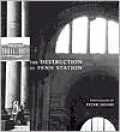
Opened to the public in 1910, McKim, Mead & White's Pennsylvania Station featured a dramatic vaulted glass ceiling over its expansive main concourse and was inspired in part by the Roman Baths of Caracalla, giving visitor and commuter alike an experience of grandeur in entering and leaving the city. The decision in 1962 to replace the old station and its subsequent demolition ultimately proved to be key moments in the birth of the historical preservation movement--a movement that came too late to save Penn Station itself. But during this period one might on any given day of the week, have seen Peter Moore in the station, carefully photographing the building and the process of its destruction, even as above his head--and above the heads of the 200, 000 commuters who transversed the station each day--cranes were beginning to take down what had been one of the grandest public buildings of the twentieth century. Moore visited the Station again and again between 1962 and 1966 to document its architectural form as well as the drama of its ''unbuilding.'' The resulting photographs combine compositionally elegant images of architectural form and details with haunting pictures of glass and masonry stripped away from steel girders as the building is progressively demolished.Synopsis
Peter Moore's gorgeous photographs document the dismantling of Penn Station, one of New York's most beautiful historic buildings.
New York Times Book Review - David W. Dunlap
Powerfully composed and richly tonal, Moore's photographs are in one sense an appreciation of the undeniable bravura of the demolition. But ultimately, by allowing contemporary viewers to experience freshly that slow-motion tragedy, they illustrate why New Yorkers' sense of loss endures to this day.
Editorials
David W. Dunlap
Powerfully composed and richly tonal, Moore's photographs are in one sense an appreciation of the undeniable bravura of the demolition. But ultimately, by allowing contemporary viewers to experience freshly that slow-motion tragedy, they illustrate why New Yorkers' sense of loss endures to this day.— New York Times Book Review
Book Details
Published
March 1, 2001
Publisher
D.A.P./Distributed Art Publishers
Pages
128
Format
Hardcover
ISBN
9781891024054