
Nature, Marine Terrain, Ships & Shipbuilding, British & Commonwealth - Armed Forces, German History, Navy & Naval History, Aquatic Life & Sciences, World War II, Natural Terrain, British History - General & Miscellaneous, Armed Forces History
Log in to track your reading progress.
Overview
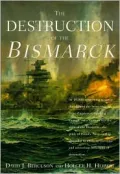
In The Destruction of the Bismarck, noted historians Holger Herwig and David Bercuson make use of recently opened archives and the most up-to-date research to tell the dramatic story of one of the most extraordinary turning points of the Second World War--the pursuit and sinking of the German battleship Bismarck. Finally, here is the full story, from the key strategic decisions of the national leaders, to the gripping hour-by-hour account of the battle. This is history of the best sort, vivid and authoritative--the definitive account of one of the most dramatic and momentous events of the Second World War.Editorials
Publishers Weekly
Made famous by a postwar Hollywood movie and Johnny Horton's song, the destruction of the feared German WWII warship involved the Royal Navy as well as clandestine American air and sea support. Canadian authors Bercuson, who has penned more than 30 books, and Herwig, who edits a book series titled Naval Policy and War, have teamed up to present a new look at the short-lived cruise of the German battleship in May 1941. Many previous books provide painstaking blow-by-blow accounts of the action; the authors here examine recently opened diplomatic flies from England and America that provide some fresh new data concerning the supposedly neutral American involvement in the hunt for the Bismarck. American planes spotted the German ship after she sank the Hood, and, although some of the evidence is circumstantial, the authors make a compelling claim that American Coast Guard vessels also assisted the overworked Royal Navy. Included in this book are concise, analytical biographies of the major officers from both sides, brief histories of the major naval vessels involved and cutting analysis of the crucial command decisions that sealed the Bismarck's fate. Students of WWII naval warfare will find this compelling reading, as will those interested in FDR's policy toward the belligerents. 21 illustrations and 3 maps not seen by PW. (Nov.) Copyright 2001 Cahners Business Information.Library Journal
The lack of a long naval tradition, Hitler's weak naval strategic outlook, Swedish espionage, FDR's close cooperation with Churchill even before Lend-Lease, and the official entry of America into World War II all combined to make the first cruise of the German battleship Bismarck a disaster. This hour-by-hour narrative by historians Bercuson (The Oxford Dictionary of Canadian Military History) and Herwig (coauthor, with Bercuson, of Deadly Seas) will keep readers on the edge of their seats. The authors have done good research and avoid the hyperbole often associated with descriptions of the Bismarck's sinking in 1941. Brief biographies of British and German naval leaders help us understand their philosophies of naval warfare. The Bismarck's brief encounter with the Royal Navy cemented Hitler's distaste for a surface war and helped eliminate the German surface fleet as a major player in World War II. A definite purchase for libraries seeking to update their naval collections, this volume also serves to update the two previous standard works on the Bismarck: William Shirer's Sinking of the Bismarck (o.p.) and C.S. Forester's The Last Nine Days of the Bismarck (1959). Richard Nowicki, formerly with Emerson Vocational High Sch. Buffalo, NY Copyright 2001 Cahners Business Information.Kirkus Reviews
A retelling of the best news the British had apart from Pearl Harbor in the dismal year of 1941: the sinking of the fearsome German battleship Bismarck. Canadian military historians Bercuson and Herwig (Deadly Seas, not reviewed, etc.) have supplemented the usual sources with newly opened diplomatic files. The result is the most detailed history yet of this dramatic episode. Even military buffs will be surprised to discover how flyblown and out-of-date the Royal Navy was after 20 years of neglect. Except for their radar, its warships were technologically inferior to Germany's and even to those of France and Italy. The Bismarck was at once the largest and the fastest battleship in the world. Its maiden departure in May 1941 to raid Allied commerce galvanized the British navy. Dozens of ships gave chase. The first encounter was a disaster. Britain's largest battleship, the Hood, was blown to bits, a second badly damaged. Ironically, the blow that doomed the Bismarck was delivered by an airplane that was as obsolete as much of the British fleet. A Royal Navy Swordfish, an ancient, open-cockpit biplane, and the Royal Navy's torpedo bomber, disabled the Bismarck's steering, allowing an overwhelming force to close in. Despite their thorough research, the authors do not examine the traditional assessment of the Battle of the Atlantic: that the Germans came within a whisker of winning. The truth is that U-boats plus commerce raiders like the Bismarck frightened the Allies and produced a long, bitter struggle. Yet the outcome was never in doubt: 99% of convoyed Allied merchant ships reached their destination. Berucson and Herwig add little to the big picture here, but the story ofthe Bismarck, the technical details of naval warfare, and the biographies of the major participants remain endlessly fascinating. (21 illustrations, 3 maps)Book Details
Published
December 1, 2002
Publisher
Overlook Press
Pages
388
Format
Paperback
ISBN
9781585673971