
Religion & Science, Sociology - General & Miscellaneous, Sociology of Religion, Psychology & Religion, Socio-Cultural Anthropology - General & Miscellaneous, Religion - General & Miscellaneous
Available on Bookshop
Write a review
Books.org participates in affiliate programs including Bookshop.org and the Amazon Services LLC Associates Program. We may earn a commission from qualifying purchases made through links on this page, at no additional cost to you.
Log in to track your reading progress.
Overview
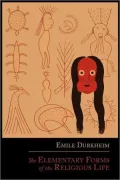
2012 Reprint of 1954 Edition. Exact facsimile of the original edition, not reproduced with Optical Recognition Software. "The Elementary Forms of the Religious Life" analyzes religion as a social phenomenon. Durkheim attributes the development of religion to the emotional security attained through communal living. According to Durkheim, early humans associated such feelings not only with one another, but with objects in their environment. This, Durkheim believed, led to the ascription of human sentiments and superhuman powers to these objects, in turn leading to totemism. The essence of religion, Durkheim finds, is the concept of the sacred, that being the only phenomenon which unites all religions. "A religion," writes Durkheim, "is a unified system of beliefs and practices relative to sacred things, that is to say, things set apart and forbidden - beliefs and practices which unite into a single moral community called a Church, all those who adhere to them." In modern societies, the individual and individual rights evolve to become the new sacred phenomena, and hence these may be called "religious" for Durkheim. Durkheim examined religion using such examples as Pueblo Indian rain dances, the religions of aboriginal tribes in Australia, and alcoholic hallucinations.Published in 1912, The Elementary Forms of the Religious Life was the last major book by the great sociologist Emile Durkheim. An early translation has remained the only English-language version available, despite many errors. Now a sociologist and religious scholar offers a much-needed new translation that will restore Durkheim's work to its original brilliance.
Synopsis
2012 Reprint of 1954 Edition. Exact facsimile of the original edition, not reproduced with Optical Recognition Software. "The Elementary Forms of the Religious Life" analyzes religion as a social phenomenon. Durkheim attributes the development of religion to the emotional security attained through communal living. According to Durkheim, early humans associated such feelings not only with one another, but with objects in their environment. This, Durkheim believed, led to the ascription of human sentiments and superhuman powers to these objects, in turn leading to totemism. The essence of religion, Durkheim finds, is the concept of the sacred, that being the only phenomenon which unites all religions. "A religion," writes Durkheim, "is a unified system of beliefs and practices relative to sacred things, that is to say, things set apart and forbidden - beliefs and practices which unite into a single moral community called a Church, all those who adhere to them." In modern societies, the individual and individual rights evolve to become the new sacred phenomena, and hence these may be called "religious" for Durkheim. Durkheim examined religion using such examples as Pueblo Indian rain dances, the religions of aboriginal tribes in Australia, and alcoholic hallucinations.Book Details
Published
May 16, 2012
Publisher
Martino Fine Books
Pages
468
Format
Paperback
ISBN
9781614273011