
Europe - Eastern Europe - Peoples & Places
Log in to track your reading progress.
Overview
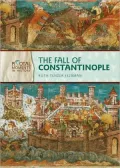
How did the loss of one city change the history of Europe? In the Middle Ages, Constantinople's perfect geographic location—positioned along a land trade route between Europe and Asia as well as on a strategic seaway from the Black Sea to the Mediterranean— made the city extremely desirous, and as a result, prone to attack. Under the control of the Roman and Byzantine Empires, Constantinople became known as "the Eye of the World," a center of government, trade, art, religion, and learning, and was even more desirous. Rulers built three sets of walls to protect Constantinople from attacks by Asiatic tribes. But the city's fall to the Turkish Ottomans in 1453 marked the official end of the Byzantine Empire—and the end of the Middle Ages. Learn how the fall of Constantinople became one of history's most pivotal moments.Editorials
Children's Literature -
"For centuries many people thought that this ‘eye of the world' was the most perfect spot on Earth." As a result, Constantinople (modern day Istanbul, Turkey), has had a turbulent and often violent history. Conquerors have come from both the West (Europe) and the East (Asia). After establishing the importance of the geographic location, Feldman presents the rulers who established and reestablished the city. Power, prestige and religion have all played a part in the desire to control this region. The author has done an excellent job of recounting the major battles, explaining who was involved, and concluding why they were important. There is a lot of detail here. However, to keep the book from becoming too information-dense, green sidebars provide key facts and parchment-looking panels provide quotes from primary sources. The artwork not only shows the kinds of art created through the years, but also armaments and battles, types of clothing, and portraits. As part of the "Pivotal Moments in History" series, the back matter includes a glossary, source notes, a list of resources for further reader, a list of recommended web sites, an index, an explanation of the primary sources, a list of secondary sources, a timeline from 600 BC to 1923 AD, and a "Who's Who" list of the people who have played a major role in the history of this city, including Constantine, Mehmed II, Justinian I, and Temur the Tatar. Only one small map is included. Because the geography is so important, more maps of the topography and various time periods would have enhanced the readers' understanding even further. Reviewer: Sharon SalluzzoBook Details
Published
June 14, 2026
Publisher
Lerner Publishing Group
Pages
160
Format
Binding
ISBN
9780822559184