
20th Century American History - Social Aspects - Post World War II, 20th Century American History - Relations - General & Miscellaneous, International Relations - General & Miscellaneous, U.S. Politics & Government - 1945 - 1989, U.S. Politics & Governmen
Log in to track your reading progress.
Overview
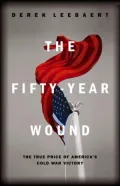
The Fifty-Year Wound is the first cohesively integrated history of the Cold War, one replete with important lessons for today. Drawing upon literature, strategy, biography, and economics-plus an inside perspective from the intelligence community-Derek Leebaert explores what Americans sacrificed at the same time that they achieved the longest great-power peace since Rome fell. Why did they commit so much in wealth and opportunity with so little sustained complaint? Why did the conflict drag on for decades? What did the Cold War do to the country, and how? What was lost while victory was gained? Leebaert has uncovered an astonishing array of never-published documents and information, including major revelations about American covert operations and Soviet military activities. He has found, in the shadows of one of this century's great, epic stories, the sort of details and explanations that hit with the force of a lightning bolt and will change forever the way we think about our past.Author Biography: Derek Leebaert teaches government at Georgetown University. He has also taught at Georgetown's business school, been a Smithsonian Fellow, and was a post-doctoral fellow at Harvard's Center for Science and International Affairs. Leebaert lives in Connecticut and Washington, D. C.
Editorials
From Barnes & Noble
America won the Cold War, right? But at what cost? And how does that victory prepare us for what lies ahead? Derek Leebaert looks at the decades-long struggle and shows that some of the issues involved have still not been addressed. Leebaert, a Georgetown University professor and U.S. government consultant, covers the entire timeline of the Cold War and its aftermath.Publishers Weekly
Leebaert, a founding editor of the journal International Security and lecturer in government at Georgetown, recalls how Paul Nitze, a long-time Cold Warrior, said at the turn of the 21st century that "we did a goddamn good job" with the Cold War. Leebaert answers that assessment in his sure-to-be-controversial and riveting book, in which heretofore unpublished documents and new analyses combine to create a lucid, balanced and in-depth study of the issue. "Well," Leebaert writes, "yes and no: yes if the overriding emphasis is that civilization survived more or less intact, that the Soviet Union collapsed peacefully, and that most of the world was liberalized along the way; no if we dwell on the indirection, inexcusable ignorance, political intrusions, personal opportunism, and crimes underlying this ultimate victory." What, in other words, did we lose in order to win? After relatively few pages outlining the postwar crises and confrontations up to 1950 and the Korean War, Leebaert begins what becomes a brilliant and highly quotable examination of what went right and what went wrong mostly wrong, he argues as the U.S. went from containment of a virulent and ominous U.S.S.R. to abetting its collapse. According to Leebaert, the often astonishing history of our recent past has numerous villains the CIA, the Pentagon, "systems analysis" technicians, a greedy "scientific and technological elite" and what Eisenhower called the "military-industrial-congressional complex." But Ike himself is one of Leebaert's heroes, as are Truman, Marshall and Reagan (he credits the latter with accelerating the end of the Cold War). Others, such as Kennedy and Nixon, get rough treatment (for them, the presidency was "a means for displaying planetary ambitions"), as do political gurus such as Kennan and Kissinger. America had to face down the Soviets almost alone, hindered, Leebaert asserts, by the rapaciousness of the OPEC nations and the self-interest of not only the rebuilding Japan, but of France and Britain as well. He considers the Korean War to have been "the detonator that blew U.S. power around the world" and that ended any chance of post-WWII American isolationism; the Chernobyl disaster,he contends, symbolized the Soviet empire's long slide into ineptitude and paralysis. His claim, however, that the greatest Cold War nuclear crisis came not from missiles in Cuba during the Kennedy years, but from the paranoid and disintegrating Andropov in 1983, will raise some eyebrows. Much happened in the 50 years that was "harmful to American life," Leebaert writes, and many of those costs emerge as frighteningly high in this analysis. 16 pages of photos not seen by PW. (On sale Mar. 6) Copyright 2001 Cahners Business Information.Library Journal
We won the Cold War, but at what cost? Going beyond the traditional diplomatic history of scholars like John Lewis Gaddis (We Now Know: Rethinking Cold War History, Oxford Univ., 1998. rev. ed.) and recalling H.W. Brands's The Devil We Knew: Americans and the Cold War (Oxford Univ., 1994. reprint), Leebaert, who teaches government at Georgetown University and has written previously on Soviet military strategy, has used both primary and secondary sources to craft a new synthesis of America's 50-year dance with the Soviet Union. He shows how after World War II American leadership became fixated on maintaining a strong military capacity while struggling to create sustained growth at home. He considers what America would have been like if those trillions of dollars spent on the Cold War as well as the attention of the best minds of two generations had been directed toward improving the social and cultural condition of the American people. In the most important work on the Cold War to come out in years, Leebaert makes us contemplate what we lost while winning the Cold War. Highly recommended for all collections. Ed Goedeken, Iowa State Univ. Lib., Ames Copyright 2001 Cahners Business Information.Kirkus Reviews
A sprawling, highly readable history that judges America's long struggle to defeat Communism a necessary battle badly fought from start to finish. Did we do "a goddamn good job," as nuclear strategist Paul Nitze once remarked? Yes and no, concludes Leebaert (Government/Georgetown Univ.): "yes if the overriding emphasis is that civilization survived more or less intact, that the Soviet Union collapsed peacefully, and that most of the world was liberalized along the way; no if we dwell on the indirection, inexcusable ignorance, political intrusions, personal opportunism, and crimes underlying this ultimate victory." The author provides an impressive array of data to back up his assertion that the Cold War, fought with typical American haphazardness and reluctance, bled us dry, preventing us from building a New Jerusalem (or a decent health-care system) by diverting astonishing quantities of dollars into such things as developing intercontinental missiles and provisioning far-flung armies. There was good reason to confront the Communists, Leebaert allows: had the US not intervened in Korea in 1950, for instance, Josef Stalin "most likely would have been emboldened to crack down on Yugoslavia, the only independent Communist state in Europe." But America's conduct of the Cold War involved considerable betrayals (such as the abandonment of the Hungarian freedom fighters in 1956), unhappy alliances with tinhorn dictators around the world, stupid and foreseeable misadventures in places such as Vietnam, huge lies that overestimated the Soviet arsenal and the need to build up American arms to close the gap, and inexcusable gaffes in collecting and analyzing intelligence (Leebaert writes of theCIA, "no other single government body has blundered so often in so many ways integral to its designated purpose"). The author closes with a timely consideration of how such sorry artifacts of the Cold War threaten to reemerge in the new war against terrorism, led by some of the same players with much the same mindset. Fascinating through and through, if open to debate.Book Details
Published
March 1, 2002
Publisher
Boston : Little, Brown, c2002.
Pages
768
Format
Hardcover
ISBN
9780316518475