
United States History - 19th Century - General & Miscellaneous, United States History - Northeastern & Middle Atlantic Region, Executive Branch, U.S. - Political Biography, Politics & Government - General & Miscellaneous, U.S. Politics - History, United S
Log in to track your reading progress.
Overview
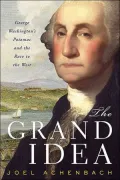
"The war had been won. Now what? This was the pressing political question for the United States in 1784, and a consuming one for George Washington. He had laid down his sword and returned home to Mount Vernon after eight and a half years as commander of the Continental Army. He vowed that he had retired forever, that he would be a farmer on the bank of the Potomac River, under his own "vine and fig tree." But history was not done with him, and he was not done with history." "Within a year, as Joel Achenbach relates in this narrative, Washington saddled up and rode away on one of the most daring journeys of his rich and adventurous life: a trek across the Appalachian mountains to the frontier, where he would inspect his long-neglected western property and try to collect rent." "The Grand Idea is the story of Washington's ambitions for the brand-new republic that he had fought so hard to create. His western journey culminates in a breathtaking scheme: Washington, with the help of Thomas Jefferson, will transform the Potomac River into a commercial artery that will link the new West to the old East. Worried that the newborn country was so fragmented that it might literally split into two separate and rival nations, he uses the skills he learned as a young backwoods surveyor to come up with his river plan. The future of the Union, Washington believes, depends on the Potomac route to the West, which will bind the country to one enterprise." "Achenbach's sympathetic and wry portrait of General Washington is not the stiff figure of official portraits, but that of a bold man who plunges into uncharted forest and sleeps in a downpour with only his cloak for shelter. He is an inventor, entrepreneur, and land speculator. He loves the West. This Washington is someone who understands that the fledgling republic clinging to the Atlantic seaboard will become a great and booming nation." Achenbach tracks Washington's river plan from the choosing of the site for the national caEditorials
Henry Wiencek
Joel Achenbach's The Grand Idea may be the ideal reading for anyone who's ever floated on, driven over, or merely gazed languidly upon the capital's mighty river and wondered about its history. As Achenbach recounts in this engaging and solidly researched book, George Washington cast his appraising eye on the Potomac and saw a watery highway to the West, a route that would unlock the riches of the Ohio Valley.— The Washington Post
Publishers Weekly
A snappy book about a river and horseback trip more than two centuries ago? Hard to pull off, but Achenbach (Captured by Aliens, etc.) has done so with enough authority to satisfy historians and in a lively style sure to please general readers. His tale is about George Washington's fixation with the West not today's Far West but the lands inland of the Appalachians and about what that single-minded interest came to mean for the nation. One wouldn't think that chapters devoted to a single horseback trip that Washington, the nation's first great westerner, took inland in 1784 could be of much interest. But the author uses that trip to unroll a large canvas of subjects, chief among them how a single man's "personal issues had a way of becoming national ones." Fleshing out a day-to-day itinerary with lively excursions into the land's geography, politics, farmers and backwoodsmen, Indians and slaves, Achenbach also unwraps Washington's personality, at once magisterial and rough, obsessive yet realistic, accepting of the people but disdainful of those who got in his way. The Potomac, whose successful development as grand route to the interior would greatly benefit Washington, also plays a central role. Achenbach explains how the river's intractable geography kept the nation's capital from becoming the great metropolis of Washington's dreams. Toward the end, the book wanders off into the Civil War and such subjects as today's Potomac and its landscape. Achenbach ought to have stuck close to his opening intent. The story of Washington's fixity on a dream impossible to realize is a good enough tale on its own. 6 maps. Agent, Michael Congdon. (June) Copyright 2004 Reed Business Information.Library Journal
After retiring from the army in 1783, George Washington boldly proposed transforming the Potomac River into a key east-west commercial thoroughfare to the Ohio River, hoping that the Potomac would make Virginia, Maryland, and himself prosperous and unite the young nation's Atlantic states with its trans-Appalachian territories. In 1784, Washington traveled into backcountry (now West) Virginia and Pennsylvania to gather information for his grand idea. Achenbach (Captured by Aliens), a Washington Post staff writer, describes the journey Washington undertook, giving glimpses of his observations of the area's natural features and the frontier life of white, black, and Native Americans. Achenbach successfully weaves Washington and early America with the Potomac and carries the narrative of the river to the present. Though Warren Hofstra's George Washington and the Virginian Backcountry and Charles Royster's The Fabulous History of the Dismal Swamp Company offer scholarly, analytical presentations of Washington as a land-speculating businessman, landlord, outdoorsman, and slaveholder, Achenbach makes such knowledge accessible to lay readers. Recommended for all public libraries. Charles L. Lumpkins, Pennsylvania State Univ., State Coll. Copyright 2004 Reed Business Information.Book Details
Published
June 30, 2004
Publisher
New York : Simon & Schuster, c2004.
Pages
384
Format
Hardcover
ISBN
9780684848570