
Western United States - History - General & Miscellaneous, North America - History - General & Miscellaneous, Natural History - General & Miscellaneous, Natural Literature & History, Public Opinion - United States
Log in to track your reading progress.
Overview
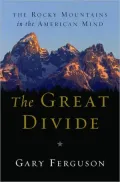
A rich natural and cultural history of the Rocky Mountains and their place in the American imagination.For most of our nation's history, Americans have identified with the "purple mountain majesties" of the Rockies. Trappers and debutantes, miners and missionaries, artists and drinkers, escaped slaves, independent women abandoning hoopskirts, and assorted black sheep of respectable families have all sought refuge and inspiration there. This spectacular landscape has always offered a sense of freedom from crowds and conformity—a world, as Frederic Remington described it, "beyond derby hats and mortgages bearing eight percent." Gary Ferguson spins magnificent tales about the vivid characters who have peopled this majestic region, from the original Indian inhabitants and their interactions with European explorers, to the delirious victims of gold rush fever, to hippies in the Sixties, to today's adventure travelers in high-tech outerwear toting satellite phones into the wild. Throughout, he explores the ebbs and flows of America's attitude toward the vast expanses that embody our sense of freedom.Author Biography: Gary Ferguson's nature articles have appeared in dozens of national magazines, and he lectures regularly on wilderness and conservation issues. He lives in Montana.
Editorials
Publishers Weekly
Naturalist and historian, Ferguson (The Yellowstone Wolves) begins this sturdy, well-crafted book sensibly with the paleogeology, climatology, flora and fauna of the 300,000-square-mile Rocky Mountain range. Absorbing as these passages are, with an easy flow of captivating information, it is when the author turns his hand to describing the variety of human characters who have wandered in the Rockies through the ages that the narrative moves with the exhilaration of a kayak run in a mountain river. Folklore heroes, the trappers, guides and assorted mountain men were truly larger than life and came from the gamut of society, including wealthy and middle-class backgrounds, country and city, freed and escaped slaves. Contrary to the stereotypes, these were not uncouth rowdies who could not make it in more typical circumstances. While the author cites many famous mountain heroes, including Kit Carson and General Fr mont, the lesser-known adventurers are just as fascinating. Moving through history, the reader experiences the gold fever that was near pandemic in 19th-century America, the hippie influx of the 1960s and more. There is also a thoughtful analysis of the contemporary situation in the Rockies. From extreme sports adventurers and casual hikers to developers, the mountains are under increasing environmental duress, and Ferguson is an important voice on these issues. Illus. (June) Copyright 2004 Reed Business Information.Kirkus Reviews
Middling cultural history of the continent-shaping, and history-shaping, landform. The two-mile-high Rocky Mountains, argues Montana natural-history writer Ferguson (Shouting at the Sky, 1999, etc.), are "as close as America has come to an archetypal landscape-a region that, although far removed from the core of society, reflected much about our most persistent longings." Never mind that advocates of just about every other American region-the South, the Great Plains, California-have made similar claims for the archetypal supremacy of their chosen place; those great mountains incontestably figure in plenty of books, movies, musical compositions, paintings, and private dreams. Ferguson begins, unpromisingly, with a slide-viewer geographical tour of the region from Montana to northern New Mexico, which comprises very different cultures and histories; along the way, he offers a lackluster look at the place of mountains in the imagination. Happily, he also condenses into a few pages a complex geological history that would have taken John McPhee a volume or two to lay out. Ferguson has a fine appreciation for the feel of the Mountain West and the sometimes tetchy sensibilities of its inhabitants-case in point a Montana politico who, upset at Redbook magazine's use of the phrase "Big Sky Country" for the whole of the region, wrote a letter to the editor reminding readers that "only four times has the American Army ever been truly licked, and all four times it was Montanans who administered that threshing." Another high point is Ferguson's look at how the 1960s counterculture came to see the Rockies as a haven, and, en masse, transformed dying old mining towns into oases of the hipstersensibility that even today seem a little different from the mainstream. Still, Ferguson's slender narrative just doesn't add up to much, and is certainly not in a literature enriched by the likes of Wallace Stegner, Bernard De Voto, Ivan Doig, James Welch, and company.Book Details
Published
August 12, 2004
Publisher
New York : W.W. Norton & Company, c2004.
Pages
288
Format
Hardcover
ISBN
9780393050721