
Health, Women's Health
Log in to track your reading progress.
Overview
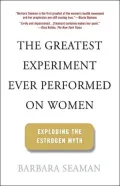
For almost a century women have been taking some form of estrogen to combat the effects of menopause and aging, and more recently to prevent a host of diseases, from osteoporosis to Alzheimer's to heart disease. For most of that hundred years, doctors have been prescribing estrogen in either its organic or synthetic forms, and women have gone to their pharmacists and dutifully filled their prescriptions. In some cases, menopause sufferers who were experiencing the most extreme symptoms were in search of relief from hot flashes, night sweats, dryness, and more, but increasingly in recent years, women began receiving estrogen sometimes with progesterone as "hormone therapy," not because they were in immediate danger of anything but rather as a preventative. But was this regimen warranted? Did doctors know enough about estrogen and its effects to be widely prescribing it for such a range of ailments? Or were women being used as guinea pigs in a great experiment, an experiment the author terms "The Greatest Experiment Ever Performed on Women"?Editorials
Booklist
A wake-up call to women about unquestioningly accepting doctors' orders.—Donna ChavezSusan Love
Barbara Seaman is one heroine of the women's health movement. She pointed out postmenopausal hormones . . . dangerous . . . relentless fighter for women's health.Gloria Steinem
Barbara Seaman, first prophet of women's health movement and her prophesies are still coming true.San Francisco Chronicle
A splendid history that exposes how menopause was transformed into a medical problem . . .The New York Times
Lively and impassioned…[Seaman] certainly makes her point.Cleveland Plain Dealer
Seaman's story is sometimes astounding.Publishers Weekly
In June 2002, a large, randomized study of a synthetic estrogen was stopped early because the risks to the postmenopausal women involved were outweighing the benefits, and many women who had been taking estrogen for years were left confused and angry. Seaman, a veteran women's health journalist (The Doctor's Case Against the Pill; Women and the Crisis in Sex Hormones), reminds readers that these findings are just the latest twist in the long and fascinating history of estrogen therapy. In Part I, Seaman offers a somewhat meandering explanation of how the estrogen drug Premarin was developed in the 1930s and then broadly marketed and prescribed to treat menopausal symptoms for the next five decades, despite the known increased risk of endometrial and breast cancer. She describes the historical roles played by different researchers, government officials and activists, and draws parallels to the Senate hearings about the birth control pill that led to prescription drug warnings for patients. In Part II, Seaman reviews the data on estrogen therapy and reveals how it was prematurely promoted to protect against heart disease and Alzheimer's; this section sometimes veers off-topic by delving into, for example, tai chi as an alternative risk reduction measure for osteoporosis. This sprawling book concludes with a chapter on environmental estrogens and an appendix on practical information on menopausal women's treatment options, including other hormone supplements. Seaman passionately and convincingly argues that women have been unnecessarily put at risk by doctors treating menopause as a disease, but a more tightly focused book would have made her case much stronger. (June) Copyright 2003 Reed Business Information.From The Critics
"Seaman's story is sometimes astounding." (Cleveland Plain Dealer)Library Journal
When the Women's Health Initiative of the National Institutes of Health stopped one arm of its hormone replacement therapy (HRT) clinical trial last July, it announced that "the balance of risks and benefits for hormone use in healthy postmenopausal women remains uncertain." Seaman, a women's health advocate and author of The Doctor's Case Against the Pill, explains the controversy surrounding the use of prescription hormones for birth control, menopause, and postmenopause. She highlights the history of their development (evidence of their cancer-causing properties was supressed); their extensive marketing, first to doctors and then to patients; and their prevalence in American society throughout the second half of the 20th century. Quite obviously, the author is opposed to the use of long-term prescription hormones; after her aunt died of endometrial cancer in 1959, Seaman was warned by doctors not to take Premarin, and she has spent 40 years researching sex hormones. This book is in direct opposition to older titles like Adam Romoff's Estrogen: How and Why It Can Save Your Life. HRT still remains a confusing and popular topic, and Seaman will add a piece to the puzzle for many readers. Recommended for all libraries, especially public. (Bibliography and notes not seen.)-Elizabeth Williams, Fresno City Coll. Lib., CA Copyright 2003 Reed Business Information.Book Details
Published
July 1, 2003
Publisher
Hyperion Books
Pages
352
Format
Hardcover
ISBN
9780786868537