
Fiction, Fiction Subjects, Peoples & Cultures - Fiction
Log in to track your reading progress.
Overview
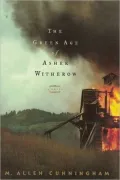
In this powerful debut from a young writer of stunning talent, M. Allen Cunningham takes us into a time and place at once gritty and magical, when the future seems filled with promise but where the day’s labor is bone breaking, numbing and always dangerous.
Gorgeously written, historically authentic, The Green Age of Asher Witherow is a novel of tested loyalties, of condemnation and redemption. The characters’ deep emotional lives are complex and vivid, fluctuating from the doomed to the transcendent. As he unpacks his heart, Asher comes to realize that all his early traumas have somehow bonded him to the land surrounding Mount Diablo and infused his life with an inward wealth—a treasure at which we can only wonder.
Editorials
Publishers Weekly
A miner's son is immersed in the dark spirituality of an insular, mostly Welsh Northern California mining town in the mid-19th century in this gritty coming-of-age debut. When Asher Witherow is eight, he witnesses the burning of his best friend, Thomas Motion, in a horrific accident as the boys explore the caverns of nearby Mt. Diablo. Witherow hides his knowledge of the accident even as a search is mounted, a situation that intrigues Josiah Lyte, the boy's bizarre schoolteacher and local preacher who eventually gets cast out by the populace for integrating Hindu elements from his upbringing in India into his work. Much of the novel deals with Lyte's mystical influence over his precocious pupil, but some years after the accident Witherow also enters into an ill-fated romance with his "evening friend," Alice Flood. Cunningham does a superb job of capturing the grim rhythm of life in the mines, balancing that material with fine childhood character studies. Occasionally, the author gets carried away and the spiritual material turns lurid, but the beauty of Cunningham's naturalistic prose and the strong characterization of young Asher Witherow make this a worthwhile debut from a noteworthy new author. Agent, Judy Heiblum. (Oct.) FYI: This is the launch title of a new independent line created by Fred Ramey and Greg Michalson, former heads of MacMurray & Beck and Putnam/BlueHen. Copyright 2004 Reed Business Information.Kirkus Reviews
Life and death among Welsh immigrant coalminers in 19th-century California. In an awkward weave, first-novelist Cunningham, a two-time Pushcart nominee for his short fiction, incorporates an early coming-of-age story with the scapegoating of an unorthodox seminarian. Narrator Asher Witherow is born in 1863 of Welsh parents in Nortonville, California, a mining town. The influence of the old country is strong: Welsh legends abound, coexisting with fervent religious beliefs. Asher's father, David, is resigned to life as a miner ("we endure"), while his mother, Abicca, is the militant one. At seven, Asher begins 12-hour days at the pit head, with school at night; by age nine, he's underground, soon working alongside his father. Death is never far away. Asher's playmate Thomas accidentally burns to death in an abandoned mine. Even though he saw it happen, Asher denies all knowledge and is crippled by guilt. Josiah Lyte, seminarian and Asher's teacher, is to be unfairly implicated by the narrow-minded townspeople. Josiah knows that Asher is a prodigy, and the two have quickly bonded. Josiah, the best character here, is the son of missionaries in India, and he embraces Hindu deities and Buddha as well as Christ. His pantheism resonates strongly with the young Asher, who is as advanced physically as he is spiritually-and before he's 12, he has impregnated his little girlfriend Anna ("Our bodies had stepped over without us"). Fire burns again, this time as metaphor for the sexual union. Too frail to sustain a pregnancy, Anna consents to an abortion, but then she too dies in a fire. Next, Asher's mother dies, and Josiah (present at Anna's abortion) is run out of town. Such events are all shoehornedinto the final third of a poorly paced novel that strives mightily to find the right language for the elemental Lawrentian urges at work, though too often the result is bombast. Disjointed material and unmatured style make for some rough sledding.Book Details
Published
October 7, 2004
Publisher
Unbridled Books
Pages
288
Format
Hardcover
ISBN
9781932961003