
Join Books.org — it's free

Religion & Beliefs - Fiction, Horror, Thrillers, Literary Styles & Movements - Fiction, Historical Fiction, Teen Fiction - Horror & Suspense
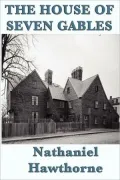
The House of Seven Gables by Nathaniel Hawthorne β€” book cover

The House of Seven Gables

by Nathaniel Hawthorne
Available on Bookshop Write a review

Books.org participates in affiliate programs including Bookshop.org and the Amazon Services LLC Associates Program. We may earn a commission from qualifying purchases made through links on this page, at no additional cost to you.

Log in to track your reading progress.

Overview

The house of the title is a gloomy New England mansion, haunted from its foundation by fraudulent dealings, accusations of witchcraft, and sudden death. The current resident, the dignified but desperately poor Hepzibah Pyncheon, opens a shop in a side room to support her brother Clifford, who is about to leave prison after serving thirty years for murder.

A cartoon version of the misfortunes that plague a prominent New England family because of greed and a two-hundred-year-old curse.

Synopsis

A prominent New England family suffering under a two-hundred-year-old curse is plagued by greed, vengeful acts, and violent death. The house of the title is a gloomy New England mansion, haunted from its foundation by fraudulent dealings, accusations of witchcraft, and sudden death. The current resident, the dignified but desperately poor Hepzibah Pyncheon, opens a shop in a side room to support her brother Clifford, who is about to leave prison after serving thirty years for murder.

About the Author, Nathaniel Hawthorne

Nathaniel Hawthorne (1804 - 1864) was a novelist and short story writer. He wrote many classic novels including The Scarlet Letter, Tanglewood Tales, Twice-Told Tales, and The House of the Seven Gables.

Biography

Nathaniel Hathorne, Jr., was born into an established New England puritan family on Independence Day, 1804, in Salem, Massachusetts. After the sudden death of his father, he and his mother and sisters moved in with his mother's family in Salem. Nathaniel's early education was informal; he was home-schooled by tutors until he enrolled in Bowdoin College in Brunswick, Maine.

Uninterested in conventional professions such as law, medicine, or the ministry, Nathaniel chose instead to rely "for support upon my pen." After graduation, he returned to his hometown, wrote short stories and sketches, and chanced the spelling of his surname to "Hawthorne." Hawthorne's coterie consisted of transcendentalist thinkers, including Ralph Waldo Emerson and Henry David Thoreau. Although he did not subscribe entirely to the group's philosophy, he lived for six months at Brook Farm, a cooperative living community the transcendentalists established in West Roxbury, Massachusetts.

On July 9, 1942, Hawthorne married a follower of Emerson, Sophia Peabody, with whom he had a daughter, Una, and a son, Julian. The couple purchased a mansion in Concord, Massachusetts, that previously had been occupied by author Louisa May Alcott. Frequently in financial difficulty, Hawthorne worked at the custom houses in Salem and Boston to support his family and his writing. His peaceful life was interrupted when his college friend, Franklin Pierce, now president of the United States, appointed him U.S. consul at Liverpool, England, where he served for four years.

The publication of The Scarlet Letter in 1850 changed the way society viewed Puritanism. Considered his masterpiece, the novel focuses on Hawthorne's recurrent themes of sin, guilt, and punishment. Some critics have attributed his sense of guilt to his ancestors' connection with the persecution of Quakers in seventeenth-century New England and their prominent role in the Salem witchcraft trials in the 1690s.

On May 19, 1864, Hawthorne died in Plymouth, New Hampshire, leaving behind several unfinished novels that were published posthumously. He is buried at Sleepy Hollow Cemetery in Concord, Massachusetts.

Author biography from the Barnes & Noble Classics edition of The Scarlet Letter.

Good To Know

Hawthorne's birth name was actually Nathaniel Hathorne. It's rumored that he added a "w" to avoid being associated with his Puritan grandfather, Judge Hathorne -- who presided over the Salem Witch Trials.

Among Hawthorne's peers at Maine's Bowdoin College: author Henry Wadsworth Longfellow and Franklin Pierce, who would later become the country's 14th president.

In its first week of publication, The Scarlet Letter sold 4,000 copies.

Hawthorne died on May 19, 1864, at the Pemigewasset House in Plymouth, New Hampshire. Ironically, former president Franklin Pierce had advised him to go there for his health.

Reviews

There are no reviews yet. Log in to write one.

Editorials

School Library Journal

Gr 9 UpHawthorne's tale about the brooding hold of the past over the present is a complex one, twisting and turning its way back through many generations of a venerable New England family, one of whose members was accused of witchcraft in 17th century Salem. More than 200 years later, we meet the family in its decaying, gabled mansion, still haunted by the presence of dead ancestors: Hepzibah, an elderly gentlewoman fallen on had times; her ineffectual brother, Clifford; and young Phoebe, a country maiden who cheerfully takes it upon herself to care for her two doddering relations. There's also Holgrave, a free-spirited daguerreotypist, who makes a surprising transformation into conventional respectability at the story's end. These people seem to be symbols for Hawthorne's theme more than full-bodied characters in their own right. As such, it can only be difficult for today's young adults to identify with them, especially since they are so caught up in a past that is all but unknown to present day sensibilities. Talented Joan Allen, twice nominated for Academy Awards, reads the tale in a clear, luminous voice. Because she has chosen not to do voices, however, it is sometimes difficult to tell which character is speaking. Still, she is more than equal to the task of handling Hawthorne's stately prose in a presentation that will be a good curriculum support for students of Hawthorne or those seeking special insight into this work of fiction.Carol Katz, Harrison Library, NY

Book Details

Published
March 28, 2012
Publisher
Wilder Publications
Pages
238
Format
Paperback
ISBN
9781617207112

More by Nathaniel Hawthorne

Similar books