
Businesspersons & Entrepreneurs - Biography, Computer Industry - General & Miscellaneous, Technology Industries - General & Miscellaneous, Computers - History, Business Biography - Specific Individuals, Technology Industries - History, Engineers - Biograp
Log in to track your reading progress.
Overview
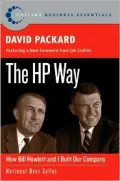
In the fall of 1930, David Packard left his hometown of Pueblo, Colorado, to enroll at Stanford University. There, he befriended another freshman, Bill Hewlett. After graduation from college, Hewlett and Packard decided to throw their lots in together. They tossed a coin to decide whose name should go first on the notice of incorporation, then cast about in search of products to sell. Today, the one-car garage in Palo Alto that housed their first workshop is a California historic landmark: the birthplace of Silicon Valley. And Hewlett-Packard has produced thousands of innovative products for millions of customers throughout the world. Their little company employs 98,400 people and boasts constantly increasing sales that reached $25 billion in 1994. While there are many successful companies, there is only one Hewlett-Packard. Because from the very beginning, Bill and Dave had a way of doing things that was contrary to the prevailing management strategies. In defining the objectives for their company, Packard and Hewlett wanted more than profits, revenue growth, and a constant stream of new, happy customers.Editorials
New York Times Book Review
An unswerving chronology of the life and most good times of Hewlett-Packard, from its notional beginnings . . . to its luminous present.Library Journal
Hewlett-Packard is a high-tech company with over $25 billion in sales; the Hewlett-Packard way has obviously been quite successful. Here, one of the company's founders tells the story of its growth. Packard frequently becomes nostalgic, such as when talking about his first vacuum tube. He explains why Hewlett-Packard follows strong management practices: management by objectives, educational subsidies for employees, profit sharing, and giving authority to employees closest to the customers. Packard also served as a Defense Department official and in doing so chose to give $20 million to charity to avoid ethical conflicts. The company history Packard relates is, however, an uncritical review. The cassettes, narrated by Martin Bookspan, are of limited use because they offer little discussion of ideas that a person in business might adopt. Not an important purchase.-Mark Guyer, Stark Cty. Dist. Lib., Canton, OhioBook Details
Published
January 3, 2006
Publisher
HarperCollins Publishers
Pages
256
Format
Paperback
ISBN
9781615529988