
Outer Space - Observation & Exploration, Astronautical Engineering - Space Stations & Satellites, Scientific Instruments, Astronauts & Space Flight
Log in to track your reading progress.
Editorials
Children's Literature
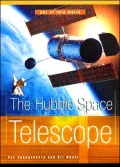
The library-bound "Out of This World" series presents a look at the work of scientist and engineers who investigate the universe beyond the Earth's atmosphere. The fifteen books in the series cover such topics as various planets, the sun, the space shuttle, the history of NASA and various NASA projects. Telescopes have been around for about 400 years, Galileo being the first to use one to look at the sky in 1609. The earth's atmosphere, light pollution and blocked radiation were all factors in scientists' interest in putting a telescope into space. The Hubble Space Telescope is about the size of a train car and can travel from Washington, D.C. to San Francisco in about 8 minutes. The tragedy of the Challenger explosion delayed the launch of the Hubble Space Telescope, which was later plagued with a mirror that was flawed by 2 millionths of a meter. An embarrassing but heroic mission corrected the error. In the ten years the Hubble Space Telescope has been aloft, it has taken 333,000 exposures of 14,000 targets. These are easy to read, informative books. 2002, Franklin Watts,— Kristin Harris
School Library Journal
Gr 5-9-Utilitarian series entries. Hubble describes the telescope and the space shuttle missions to repair and maintain it. The authors explain the scientific reasons for the telescope, its development, launch, and initial problems, and its contributions to astronomy. The book's strength is its account of the spacewalks of the astronauts assigned to work on the telescope. Illustrations are attractive and generally complement the text, but it's unfortunate that there aren't more taken by the Hubble. (Oddly the text refers to its most famous picture, but does not reproduce it.) Michael D. Cole's Hubble Space Telescope (Enslow, 1999) presents similar information. Other Worlds discusses theories of extraterrestrial life, calculations of its probability, and efforts to resolve the question of whether it exists elsewhere in the universe. It describes the origins of the solar system and misunderstandings such as the "canals" of Mars and the more recent "face on Mars" surface. Attempts to communicate with, or to intercept the communications of, distant intelligence are also explored. There is a passage on the Search for Extraterrestrial Life project (SETI), which includes a comparison with Contact, the recent motion picture based on Carl Sagan's book of the same title. Sharp, quality black-and-white and full-color photos illustrate the book. Heather Couper and Nigel Henbest's Is Anybody Out There? (DK, 1998) is flashier but similar in scope and level while David Jefferis's Alien Life Search (Crabtree, 1999) is a more sensationalistic treatment of the topic. While neither of these newer titles is extremely detailed, both are more than adequate introductions to their topics.-Jeffrey A. French, Euclid Public Library, OH Copyright 2002 Cahners Business Information.Book Details
Published
September 1, 2002
Publisher
Children's Press(CT)
Pages
128
Format
Paperback
ISBN
9780531155653