
Mammals - Apes & Monkeys, Physical Anthropology, Hunting and Gathering Societies, Evolution
Log in to track your reading progress.
Overview
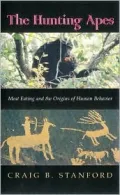
What makes humans the most successful animal species inhabiting the Earth today? Most scientists agree that the key to our success is the unusually large size of our brains. In this provocative book, Craig Stanford presents an intriguing alternative to this puzzling question -- an alternative grounded in recent, pathbreaking scientific observation. According to Stanford, what made humans unique was meat -- specifically, the hunting and sharing of meat. Based on new insights into the behavior of chimps and other great apes, our now extinct human ancestors, and existing hunting and gathering societies, Stanford shows the remarkable role that meat has played in these societies.Editorials
Deborah L. Manzolillo
Anyone who would like to review all of the arguments on human origins should read The Hunting Apes This book will go a long way in explaining why physical anthropologists and their colleagues fight so much.— Times Literary Supplement
Publishers Weekly -
Many people believe that the one trait that most sets humans apart from the rest of the animal kingdom is our intellectual capacity. Determining the evolutionary forces that led to such a qualitative difference between us and our nearest relatives can be viewed as the grail of those who study human evolution. Stanford (Chimpanzee and Red Colobus), an anthropologist at the University of Southern California, does a solid job of summarizing the wealth of often contradictory material bearing on this quest. He concludes that "the origins of human intelligence are linked to the acquisition of meat, especially through the cognitive capacities necessary for the strategic sharing of meat with fellow group members." Stanford's thesis is different from those postulated previously because of his focus on the sharing of meat and on the role that nonhunters, particularly females, have played in structuring group cohesion as well as interpersonal relationships. In prehuman groups, he contends, meat became the first commodity, not unlike money today, that could be used to acquire power, traded for sexual relations or bartered for other valuable resources. Stanford's ideas, while controversial, are amply documented by behavioral studies of nonhuman primates, anthropological studies of a number of human societies and archeological studies of early and pre-humans. (Mar.)Booknews
Based on anthropological research into early human societies, studies of existing hunting and gathering societies, and observations of the behavior of chimpanzees and other great apes, Stanford (anthropology, U. of Southern California) proposes that the desire for meat, and the eating, hunting, and sharing of meat, is an essential factor in human development. He argues that the skills developed and required for strategic hunting and sharing of meat spurred the expansion of human brain size which, most scientists agree, is responsible for the success of the human species. Stanford also describes the continuing social impact of the sharing of meat on primate and human societies. The book is intended for the lay reader as well as students and experts in the field. Annotation c. by Book News, Inc., Portland, Or.Scientific American
His main focus...is on what meat sharing by our primate ancestors meant for human intelligence...Adrian Barnett
A bold new revision confronts these perils in attempting to bring the old theory back to the centre of the academic stage. The Hunting Apes, however, is not an apologia for the original theory. Author Craig Stanford is at pains to point out the substantial flaws in the original theory. With hindsight, however, he points out that Lancaster and Washburn's theory was probably the best that could be produced at that time. But he does believe that something valuable was lost in the furor: the distinction that while meat may not be the most valuable food resource, it is the most valued among most human groups. Stanford goes further: he argues that "the origins of human intelligence are linked to the acquisition of meat, especially through the cognitive capacities necessary for the strategic sharing of meat with fellow group members". He cites the role hunting plays for chimpanzees where meat is traded for sexual favors and to cement alliances.— New Scientist
Kirkus Reviews
An unabashed celebration of the carnivorous tendencies of early humankind. Virtually every aspect of Stanford's thesis about the importance of meat acquisition and sharing among early humans is steeped in controversy. Early evolutionary models of Man the Hunter were largely dismissed in the 1970s due to the tendency of these theories to focus on male-dominated activities while ignoring the important nutritional contributions of women in hunter-gatherer societies. Stanford (Anthropology/Univ. of Southern Calif.) attempts to sidestep this issue by focusing on the social, rather than nutritional, value of meat, which is acquired primarily by males and then used to manipulate and coerce females into sexual relations. He bases his theory primarily on the hunting activities of large apes, such as chimpanzees, orangutans, and bonobos, but includes modern hunter-gatherer societies in his survey of higher-primate hunting practices. His casual association between chimp and human hunting practices is certain to enrage ethnographers who have been attempting for several decades to dismiss the notion that modern hunter-gatherer societies can serve as a model for understanding early human activities. The absolute lack of fossil evidence to support the idea that an increased desire for meat in the diet was related to, or affected by, the explosion in intelligence and brain size in early man is also certain to keep Stanford's critics from readily accepting his findings. Perhaps the most provocative aspect of Stanford's argument is the notion that meat-sharing rituals may lie at the heart of the origins of patriarchal society. The gender-specific nature of hunting and the social elevation of meat-sharingactivities may, he claims, provide the original basis for male dominance in human culture. The biological essentialism and mechanistic view of cultural activities propounded by Stanford here is not likely to sway many of the critics who wished to discredit the Man the Hunter model in the first place, but may find favor with those inclined toward sociobiology. .The Baltimore Sun
A provocative, eminently digestible book. . . . Stanford writes clearly and often deftly, and with admirable concision. . . . [A] marvelous exploration of evolutionary hypotheses . . . fascinating stuff.Times Literary Supplement
Anyone who would like to review all of the arguments on human origins should read The Hunting Apes. . . . This book will go a long way in explaining why physical anthropologists and their colleagues fight so much.New Scientist
A brave academic endeavour and a fine piece of popular science writing. . . . Stanford's book summarises a huge body of evidence in a pleasing, coherent and non-polemic way. You'll feel that you're talking with a learned . . . dinner companion, rather than enduring a lecture or hectoring sermon from an academic pulpit.Journal of the Royal Anthropological Institute
The Hunting Apes is a very enjoyable and quick read, written for a broad audience. . . . These are well-written synopses—good for students, the general informed public, and those in anthropology and other sub-disciplines who want to keep up on these topics.Times Literary Supplement
Anyone who would like to review all of the arguments on human origins should read The Hunting Apes. . . . This book will go a long way in explaining why physical anthropologists and their colleagues fight so much.— Deborah L. Manzolillo
New Scientist
A brave academic endeavour and a fine piece of popular science writing. . . . Stanford's book summarises a huge body of evidence in a pleasing, coherent and non-polemic way. You'll feel that you're talking with a learned . . . dinner companion, rather than enduring a lecture or hectoring sermon from an academic pulpit.— Adrian Barnett
Booklist
[A] provocative new look at what made people so smart. . . . This is a fascinating book, written for the nonspecialist.Journal of the Royal Anthropological Institute
The Hunting Apes is a very enjoyable and quick read, written for a broad audience. . . . These are well-written synopses—good for students, the general informed public, and those in anthropology and other sub-disciplines who want to keep up on these topics.— M. Tappen
The Baltimore Sun
A provocative, eminently digestible book. . . . Stanford writes clearly and often deftly, and with admirable concision. . . . [A] marvelous exploration of evolutionary hypotheses . . . fascinating stuff.— Michael Pakenham
The Tablet
[An] admirable little book. . . . [Stanford's] meticulously constructed study is both readable and thought-provoking and gives fascinating insights into the behaviour of our species.Book Details
Published
March 19, 1999
Publisher
Princeton, N.J. : Princeton University Press, c1999.
Pages
262
Format
Hardcover
ISBN
9780691011608