
British Poets - Literary Biography, British Literature - Reference
Log in to track your reading progress.
Overview
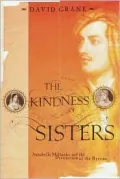
"An original account, revolutionary in technique, examining the character of the great Romantic poet Lord Byron through the lives and deadly rivalry of the two women he left behind." "The heart of David Crane's account is the lifelong feud between Augusta - Byron's half sister with whom he had a passionate affair - and Annabella, his society wife, both of whom bore him daughters. Crane reimagines the famous meeting between the two women years after Byron's death, a chillingly dramatic scene through which he explores the emotional and sexual truths that lay at the center of these tragic relationships. In the encounter between the two women - one in chronic ill health, the other dying - we have the ultimate display of their mutual obsession with the memory and compulsive influence of Byron that makes their story that of the Romantic Age itself." "It is a story full of dubious motives, especially Annabella's "saving" of Augusta and her child, Medora, and her twisted revenge on them both. And as the curses of incest and abuse play themselves out in the fates of Byron's daughters, we see their lives assuming the shape of Greek tragedy." In the meeting of the two women and the consequences of their battle, Crane shows us the Romantic Age in its terrible collision with the new world of the Victorians. The Kindness of Sisters establishes Crane as a biographer of formidable gifts.Editorials
The New Yorker
In the summer of 1938, a hundred and fourteen years after Lord Byron's nearly mythic death at Missolonghi, an intrepid vicar at the parish church of Hucknall Torkard and a small band of stalwarts decided to pay a visit to the poet of "Childe Harold's Pilgrimage" and "Don Juan" where he lay in the Byron family vault. The vicar and his crew were pleased to find, upon gingerly raising the coffin lid, that Byron had weathered the intervening years remarkably well. "The slightly protruding lip and curly hair were easily recognizable," reported an awestruck church caretaker. The incident -- perhaps the most literal in a long line of Byronic exhumations and reassessments -- turns up in Fiona MacCarthy's whopping Byron: Life and Legend, an appropriately sprawling volume devoted to the "first European cultural celebrity of the modern age." Like his twentieth-century counterpart, Elvis Presley, Byron continues to exert a necrophilic hold on the imagination, with his colossal and contradictory public image. MacCarthy's account gives us Byron in all his twisted glory: keeping a pet bear while at Cambridge, crisscrossing Europe in a monumental carriage modelled after Napoleon's, drinking claret out of a human skull, swimming the Hellespont despite a lame foot, and constantly hounded by the open secret of his bisexuality.As David Crane's The Kindness of Sisters makes clear, Byron was as maddening in love as he was in celebrity. Examining the understandably contentious relationship between Byron's wife, Annabella, and his half-sister (and lover), Augusta Leigh, Crane eloquently reminds us that there is "no English writer like him . . . no one who has so completely made his life the measure of his art."
(Mark Rozzo)Publishers Weekly
While Crane's first book, Lord Byron's Jackal: A Life of Edward John Trelawny, expanded Byron's unreliable friend from a biographic footnote into a full-blown Byronic antihero, this elliptical, tartly written and idiosyncratic new study expands on the epilogue to the poet's death in 1824: relations between his half-sister and lover, Augusta, and her sometime ally, avowed friend and lifelong rival, Lady Byron, n e Annabella Milbanke. In the process, Crane traces Byron's constantly shifting reputation and sets up Annabella's life, which spanned 18th-century Whig aristocracy, Regency society realpolitik, one year of Romantic agony and more than 40 years of ruthless Victorian rectitude, as "in miniature the story of the age." She had hoped to reform the famous author of Childe Harold and would turn her redemptive efforts to their daughter, Ada, and to Augusta and her daughter, Medora (rumored to be Byron's child). Annabella's financial cajolery and evangelical morality proved unevenly matched with the Byron gene for infamy. Ada developed a gambling mania and died young; Medora's notorious teenage seduction turned her against her mother; and Augusta, with her tainted reputation, was reduced to quasi-dependence on her sister-in-law. At the heart of the account is Crane's awkwardly dramatic and expository "imaginary dialogue" of the last meeting of the aging Augusta and Annabella, in 1851. Overall he displays a keen understanding of his subjects' vacillating and ambiguous motives. Even the repressed Annabella, he suggests, always loved Byron, the figure of Romantic and sexual freedom. 16 pages of b&w photos. (Sept. 26) Copyright 2002 Cahners Business Information.Library Journal
A dashing figure in the context of his times, Romantic poet Lord Byron was born into a tempestuous, aristocratic family and seemed genetically predisposed toward melancholy, debauchery, and uncontrollable impulses. At the heart of this biography lies the lifelong animosity between the two most important women in Byron's life, who only met two years after his death. The poet had a lifelong affair with Augusta, his half-sister, who gave birth to a daughter assumed to be Byron's. Annabella, the poet's society wife, also bore him a daughter. Both Augusta and Annabella remained obsessed with Byron's memory, influence, and legacy. Repeatedly paying homage to the Greek tragedies, this rather hybrid biography by Crane (Lord Byron's Jackal: A Life of Edward John Trelawny) contains imagined scenes describing the two women's dubious motivations and machinations. Crane ultimately uses the women in Byron's life to illustrate the tensions that resulted as English literature moved from the Romantic to the Victorian periods. Since the book is thick with academic research jargon, it is suitable for academic libraries only.-Pam Kingsbury, Alabama Humanities Foundation, Florence Copyright 2002 Cahners Business Information.Kirkus Reviews
A disappointing biography of the two most significant women in Byron's life: wife Annabella and half-sister Augusta, who was also his lover. Crane (Lord Byron's Jackal, 1999) argues that Lady Byron and Augusta Leigh were bitter enemies because each made the mistake of loving the poster child for English Romanticism's destructive tendencies. Byron seduced them both, then left both high and dry. In a sense, he married Annabella in 1815 to escape his incestuous passion for Augusta, but in fact he was happier flouting convention than living the married life, especially when that life involved responsibility for children and the mountain of debt he'd accumulated as a bachelor. Annabella realized early in their marriage that she was doomed to unhappiness, while Augusta distanced herself from the love of her life. Rumors of Byron's affair with Augusta circulated at around the same time he left England for the continent, ruining both their reputations. Crane's account of all this is competent enough until the narrative comes to a screeching and improbable halt smack in the middle with a fictional account of a meeting between the two women more than 25 years after Byron's death. Although it serves the author's purpose of clearly presenting Annabella and Augusta's relationship of mingled animosity, love, and respect, this character development comes too late and offers too little. Written in an irritating script format composed only of dialogue and notes approximating stage directions, the interlude is stylistically intrusive and psychologically incredible. The restrained emotion and deep insights Crane attributes to both women are more annoying than persuasive, their dialogue is absurd: "You knewthat, knew that even if he could escape your malice . . . then you could enjoy all the satisfaction of virtuous revenge," intones Augusta. It's hard to believe anyone ever talked in such a manner, even in the mid-19th century. For die-hard Byron fans only.Book Details
Published
September 1, 2002
Publisher
New York : Knopf, 2002.
Pages
304
Format
Hardcover
ISBN
9780375406485