
Korean War, United Nations - General & Miscellaneous, General & Miscellaneous Armed Forces, 20th Century Chinese History - General & Miscellaneous, 20th Century American History - Korean War, Korean War, 1950-1953 - History
Log in to track your reading progress.
Overview
"The Korean War provides a comprehensive picture of the war . . . and riveting tales of heroics." (The Washington Post Book World)"Hickey has written a quite brisk, succinct, and useful general history of the war." (The Chicago Sun-Times)
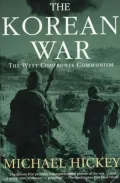
Set in the early days of the Cold War, amid fears of an enlarging conflagration, the Korean War at its height involved rapid, large-scale movements over long distances as each side experienced both outstanding success and disaster. Korean War veteran and military historian Michael Hickey tells the full story of the first test by the Communist bloc of Western resolve.
In addition to covering the dominant American involvement, Michael Hickey also sets in context the significant contributions of the other nations that answered the U.N. call. Alongside American soldiers, troops from Britain, Canada, South Africa, Australia and New Zealand, Turkey and elsewhere joined the effort. The Korean War recounts such masterstrokes as MacArthur's landing behind enemy lines at Inchon, the drama of the "glorious Glosters" episode, and both collaboration and mutiny in the prisoner-of-war camps on both sides.
Drawing on a wide range of previously unused sources from several countries, including recently declassified documents, regimental archives, diaries, and interviews, Michael Hickey adds extensively to our knowledge of one of the most significant conflicts of modern times.
Author Biography: Michael Hickey, a graduate of the Staff College, Camberley, fought in Korea. He has been a Defense Fellow at King's College, London, and was later Director of the Museum of Army Flying. He is the author of thecritically acclaimed The Unforgettable Army and Gallipoli.
Editorials
From Barnes & Noble
"The Forgotten War" is chronicled here as the first violent conflict of the cold war. More than just an American war, Korea brought together the newly-formed UN allies of England, India, Canada, Turkey, and a dozen other nations to challenge the threat of communism in South East Asia and Hickey examines the international component of the war as it affected the military successes and failures.KLIATT
The "police action" that raged on the Korean peninsula 50 years ago was an infantry war. General MacArthur's audacious and brilliant landing at Inchon brought in the Navy and the Marines, and Air Force F-86s gallantly rose to battle the MiGs over the Yalu River, miles away. Essentially, though, these were colorful sidelights. Most of the war took place in muddy foxholes and frozen hilltops, fought by filthy and tired men who existed in mortal danger. Hickey's impressive history of the Korean War is told from this viewpoint. He keeps the commanders, the high strategies and the "big picture" in focus, but essentially his is a tale of small combat units fighting endless, intricate actions in places that are hard to find on any map. Yet his narrative never bogs down, and the reader remains interested in each struggle for an unnamed hillside. This is not an adventure-oriented "guts 'n glory" tale, but rather a mature study of the entire war, focused at the company and platoon level. Hickey fought in an Australian unit and brings out an interesting dimension of the war—the role played by numerous small Allied combat units: British, Australian, and New Zealand. Unlike Vietnam, the Korean affair produced only a trickle of books, and even fewer in the half-century that has followed. Fortunately, most of them have been good ones; this title stands in their ranks. It is aimed at adult readers, especially for those who already have some knowledge of the Korean War and understand its era. Although there is a nice section on MacArthur's firing by President Truman, it is essentially for readers who are prepared to understand the Korean War strictly on its own terms. Recommended for public collections.KLIATT Codes: A—Recommended for advanced students and adults. 1999, Overlook Press, 397p. illus. bibliog. index.,Library Journal
Hickey (Out of the Sky: A History of Airborne Warfare), an active-duty colonel in the British Army and former defense fellow at King's College, London, was also a veteran of the Korean War. Using firsthand accounts and his own experiences, he has compiled a massive study of that conflict. This is a scholarly analysis of both the military and political factors that caused the war and the conduct on all sides. Hickey concentrates on the involvement of Great Britain and the Commonwealth countries but also offers considerable coverage of the Unites States and other nations, including careful discussions of the North Korean, Chinese, and Russian sides of the war. The author does not mince words when criticizing General MacArthur and other UN commanders. Using declassified documents as well as regimental and personal diaries, he wades through political intrigue and military disasters and triumphs to give us a memorable account. Not easy reading, this is still an important contribution to the literature. Recommended for scholars and serious readers of military and political history at larger public and academic libraries and for special collections.--David Alperstein, Queens Borough P.L., Jamaica, NY Copyright 2000 Cahners Business Information.\Booknews
Drawing from recently declassified documents, regimental archives, diaries, and interviews, Hickey (Korean war veteran and former director of the Museum of Army Flying) tells the story of the first military conflict between Communist bloc countries and the West. In addition to covering the dominant American involvement, he describes the contributions of the other nations that sent troops and details difficulties concerning language, culture, and logistics. Annotation c. Book News, Inc., Portland, OR (booknews.com)Kirkus Reviews
A British officer's history of the events of "The Forgotten War" in Korea. Hickey (The Unforgettable Army, not reviewed), a Korean War veteran, reports on the main events of a war fought amid the extremes of sub-zero cold and exhausting heat. The US Army was taken by surprise when the North Korean Army crossed the 38th parallel in 1950, and it lacked combat readiness after five undemanding years of garrison duty in postwar Japan. Together with unreliable Republic of Korea troops they were thrown into the bloody cauldron of combat against a prepared, ruthless enemy—and almost driven into the sea after a panic-filled retreat, until a reinforced defensive line finally held at the Pusan Perimeter in southernmost Korea. MacArthur's brilliant landing at Inchon, plus a renewed UN allied offensive saved the day. But, as everyone knows, MacArthur ignored the orders of President Truman and the Joint Chiefs of Staff, driving relentlessly to the Yalu River at the Manchurian frontier. Truman, fearing another world war with China and the Soviet Union, replaced MacArthur with General Ridgway after massive Chinese armies entered the war and forced UN forces to retreat. Hickey notes the heroic performance of the US Marines, their engineers, and the US Air Force at the Chosen Reservoir. Ridgway rallied his troops after the famous "bug out" of US and Allied troops before the huge numbers of Chinese, and he stiffened the UN lines before the long stalemate during the peace talks and the bloodletting at Pork Chop Hill. Hickey dwells at length on the experiences of the British and Australians, although the US contributed most of the manpower, supplies, and air and navalpowerthat decided the war's end. Hickey's viewpoint is that of the commanders and has little to relate about the grunts on the firing lines who suffered and died, so the reader does not get the tragic sense of the terror, heroics, and high emotion of combat. His approach suggests the reporting of a staff officer in the rear—out of harm's way. Hickey's text is clear and concise but falls short of a definitive history of the Korean War—too much is left out to justify the title.Book Details
Published
September 1, 2001
Publisher
Overlook Press
Pages
397
Format
Paperback
ISBN
9781585671793