
Fiction, American Fiction, World Literature, Fiction Subjects
Log in to track your reading progress.
Editorials
Publishers Weekly -
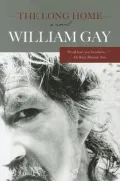
Gay's debut, an ambitious saga of love and retribution set in backwoods Georgia in the 1950s, is by turns quaint and charged -- and sometimes both. The novel begins with the 1932 murder of Nathan Winer, an honest and virtuous laborer, by Dallas Hardin, a corrupt small-town tycoon, after Winer demands that Hardin move his illegal whiskey still off Winer's land. Hardin gradually gains control of his community through extortion, bribery and psychological manipulation. When the dead man's son, also Nathan, unwittingly becomes a carpenter for his father's murderer many years afterwards, he finds his life bound with Hardin's as he falls in love with seductive beauty Amber Rose, frequently used by Hardin as an escort for his rich acquaintances. Ancient sage and recluse William Tell Oliver, who witnessed the elder Nathan's death and has the victim's skull to prove it, steps in to rectify old wrongs when Hardin threatens to kill the young Winer to maintain control over Amber Rose. A haze of mystery hangs over the narrative: voices whisper and strange lights shine from deep within swampy forests, testifying to the presence of a force more powerful than any petty human tyrant. Strange characters inhabit Gay's world, too, like a boy who thinks baby pigs come from underground or a traveling salesman who brags about his largesse but lives off of Winer's mother. Though his dialogue may sometimes be too twangy, Gay writes well-crafted prose that unfolds toward necessary (if occasionally unexpected) conclusions. Enhanced by his feeling for country rhythms and a pervasive, biblical sense of justice, Gay's take on the Southern morality tale is skillfully achieved, if familiar in its scope.New York Times Book Review
The Long Home promises to be one of the most discussed Southern debuts since Brown's Facing the Music . . . .Mirabella
. . . It belongs in that class you took in college called The American Novel . . . .Richmond Times-Dispatch
. . . William Gay might yet prove that Southern literature can accommodate two Faulkners.Kirkus Reviews
A moody first novel is offered as its gifted author's claim to the regional-metaphysical mantle currently worn by Cormac McCarthy — though, in fact, it reveals the overpowering influence of Faulkner, particularly of the "Spotted Horses" chapter in The Hamlet. A terse Prologue recounts the murder in 1932 of tenant farmer Nathan Winer by itinerant thug Dallas Hardin, following an argument over a whiskey still. Then, 11 years later, in the dilapidated backwoods hamlet of Mormon Springs, Tennessee, an increasingly bleak drama is played out among the avaricious Hardin (now a prosperous landowner and small-time entrepreneur); Winer's teenaged son and namesake; a reclusive old man named William Tell Oliver (who harbors his own guilty secrets); and a beautiful girl, Amber Rose, whom Hardin threatens to add to his ill-gotten holdings. The story — told in clipped, often enigmatic parallel scenes — emphasizes Oliver's crafty momentum toward redemption, Nathan's thwarted love for Amber Rose and dogged pursuit of vengeance, and the overreaching that brings their tormentor Hardin to a kind of justice. The Long Home (the phrase is an indigenous metaphor for death) contains several memorable scenes and striking characterizations (both Nathan's dysfunctional comrade "Motormouth" Hodges and ex-football hero and town drunk "Buttcut" Chessor are amusing troublemakers). But the novel drowns in its own rhetoric, with risible abstractions ("she shrieked at the immutability of his back") and pretentiously grotesque, and inexact, scene-setting ("The bare branches of the apple trees writhed like trees from a province in dementia"). Gay has read Faulkner with reverence (Dallas Hardinis a copy of the master's immortal, insatiable carpetbagger Flem Snopes), and imitated him without a sense of when to stop — or much wit. When it emerges from the fog of verbiage, Gay's debut tells a gripping and intermittently haunting story. If he ever decides to write his own novel, it may be a good one.Book Details
Published
September 21, 2012
Publisher
MacAdam/Cage Publishing, Incorporated
Pages
257
Format
Paperback
ISBN
9781596923867