
1870 - 1940 (Third Republic) - French History, 1848 - 1870 (Second Republic and Second Empire) - French History, 1815 - 1848 (Bourbon Restoration & July Monarchy) - French History, Europe - Civilization, Psychology - History, Social Aspects of Technology,
Available on Bookshop
Write a review
Books.org participates in affiliate programs including Bookshop.org and the Amazon Services LLC Associates Program. We may earn a commission from qualifying purchases made through links on this page, at no additional cost to you.
Log in to track your reading progress.
Overview
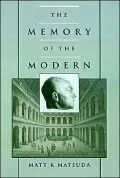
Memory has a history. The Classical world ordered and valued events differently than the Medieval world; which, in turn, was replaced by "the memory" of the Renaissance. Matt Matsuda's compelling, multidisciplinary argument in The Memory of the Modern is that the understanding, value, and uses of memory changed yet again at the end of the nineteenth and the beginning of the twentieth centuries, becoming distinctively "modern." Matsuda proves his argument by visiting a remarkable array of "memory-sites": the destruction of a monument to Napoleon during the 1871 Paris Commune; the frantic selling of futures on the Paris stock-exchange; the state's forensic search for a vagabond rapist and murderer; a child's perjured testimony on the witness stand; a scientist's dissecting of the human brain; the invention of cameras and the cinema. Each chapter studies a distinct moment when new representations of the past were forged, contested, and put to cultural and ideological use. And all these diverse events cohere as Matsuda repeatedly shows which "memories" were celebrated and which forgotten, which traditions invented and appropriated and which discarded. More importantly, he explains why, and in doing so answers the broader question, Who controls what is remembered and who is believed?Synopsis
A multidisciplinary work, Memory of the Modern examines stock markets, tango dancers, vagabond murderers, neurology, monument destruction, and colonial policies to document how individuals and institutions shaped memory in the late nineteenth and early twentieth centuries. The book studies these diverse "memory-sites" to show how memory and history are fought over, shaped, and put to personal and ideological use.
Book Details
Published
May 1, 1996
Publisher
Oxford University Press, USA
Pages
264
Format
Hardcover
ISBN
9780195093643