
Religion & Science, General & Miscellaneous Islam, General & Miscellaneous Religious Philosophy, Sufism & Islamic Mysticism, New Thought
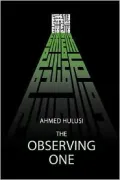
Available on Bookshop
Write a review
Books.org participates in affiliate programs including Bookshop.org and the Amazon Services LLC Associates Program. We may earn a commission from qualifying purchases made through links on this page, at no additional cost to you.
Log in to track your reading progress.
Overview
It is an overwhelming experience of perfection and beauty to witness the "oneness", i.e., the "reality", perceived as intuition or "revelation" by those in the past and relayed through allegories and metaphors, arriving at the same truth with scientific findings..As exquisitely and descriptively as one may talk about “What beauty is”, ultimately its meaning can be as diverse and numerous as its admirers. Yet no matter how infinitely various its expressions and experience may be, the concept of beauty will always remain one.
In a much similar way, although God can be defined in as many different ways as His manifestations, by essence He is One. It is this Oneness, expressed in diverse ways, hence bringing about the seeming multiplicities, that is denoted by the title The Observing One.
In other words, the Observing One is the essence of all the multitudinous manifestations in the corporeal world, and His infinitely various expressions is His act of observing Himself.
This act of observing, according to Ahmed Hulusi, is what each individual should strive to experience. That is, to experience God, one must realize the illusionary nature of the constructed self and disable its interference, thereby becoming a conduit of God’s interminable acts.
Ahmed Hulusi profoundly deconstructs both the idea of a God up in the heavens, and His representative deities on earth, and urges his readers to embark on an inward quest to discover “God within”. Compiled mostly of recorded conversations made in 1989, this book is a notable example of the author’s ingenious and unconventional construal of classical religious teachings.
Anyone, who has a spiritual yearning and an appetite for mysticism and who at the same time is an unfaltering intellectualist, is bound to enjoy reading this book. Integrating Islamic theology, in particular the esoteric teachings of Sufism, with the findings of modern science, this book enables the reader to observe the universe within.
A few things the reader should take into consideration while reading this book:
1. Although God transcendentally surpasses any gender, the masculine pronoun ‘He’ has been employed in this book, not only because using ‘It’ would be inappropriate and disrespectful, but also because ‘He’ is the closest realistic translation of the Arabic word ‘Hu’, which has no connotation of gender when used in reference to the Divine.
2. The Names of God referenced throughout the book should not be understood as titles of God, but rather as the intrinsic qualities of the Essence of existence from which the infinite modalities of the manifest world are derived.
Allah, being the Supreme Name, encompasses all of these qualities and attributes -both the manifest and the unexpressed- and is used in this book to denote this reality, rather than “a god” out there that is separate from the cosmos. In this light, the word God is deliberately avoided in this book and the original name Allah, as mentioned in the Quran, is used instead.
However, just as it is true for the word “God”, the word “Allah” also holds predetermined notions of “an external god” and this is inescapable for many people. Due to this, the author frequently uses phrases like “the existence that is denoted by the name Allah” to draw the readers’ attention to the fact that Allah is merely a name indicating an infinite existence beyond all preconceived and preconditioned ideas. Thus, it is this existence that the reader is encouraged to contemplate, in reference to the name Allah.
Book Details
Published
May 28, 2012
Publisher
Observing Oned LLC DBA Queen Creek Press
Pages
120
Format
Paperback
ISBN
9780615636641