
France - History, History - General & Miscellaneous, World War II
Log in to track your reading progress.
Overview
When the Allies invaded Normandy on June 6, 1944, one hundred orphaned girls were forced to flee their orphanage in Caen, France, the only home many of them had ever known. They began a trek on foot to a safer location, to Beaufort-en-Vallée, a town one hundred and fifty miles away. As the war raged on all sides of them, the girls, led by their teachers, bravely marched south, keeping one step ahead of the fighting and waving little white flags for protection. Told through their own drawings and words, this moving and timely book details their experiences on their journey to safety.
Relates how 100 young schoolgirls, many of them orphans, and their teachers managed to escape the chaos of the Allied invasion of Normandy on June 6, l944, by taking shelter in an iron mine for thirty-eight days and, after being forced out by the Germans, walking for twenty-nine days to reach safety behind Allied lines.
Editorials
Publishers Weekly
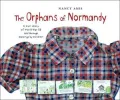
In this debut, Amis assembles the drawings and recollections of girls forced to abandon their orphanage in Normandy and travel about 150 miles on foot during the Allied invasion in 1944. Amis does not state what occasioned the girls' work, but the continuity of the girls' narrative and the homogeneity of their drawing styles suggest an unseen adult supervisor, as if a teacher had assigned-and scripted-a class project. The renditions of tanks, fighter planes and gunfire possess an arresting simplicity, and while the girls' text rarely discusses emotions, the feelings that do slip out are poignant. For example, the last page of the children's story shows girls offering flowers to American soldiers: "The little girls of the Clos were happy to see American tanks. That consoled them for all they had lost." The polished design integrates a scrap from the girls' red, white and blue tattersall uniform. A brief afterword supplies scant information about the illustrations and writings, which were sent in 1946, apparently, to Amis's great-aunt, along with black-and-white pictures of the girls in their new home. While this book may appeal to those searching for a child's view of D-Day, its fragmentary references and lack of explanatory matter may frustrate readers. Ages 8-12. (June) Copyright 2003 Reed Business Information.Children's Literature
During the Allied invasion of Normandy in 1944, one hundred orphaned girls were forced to leave their orphanage to find safety elsewhere. The girls, led by their teachers, walked over 150 miles to safety. This alone makes for an interesting read and an important one as well. This accessible story of WWII opens children's eyes to the circumstances that befell the children of that era. Children nowadays would have to pack their Game Boy and, of course, be driven the 150 miles! What is so compelling about this book is that it is illustrated with the artwork and stories of the orphans themselves as they documented their own plight. This book aptly demonstrates the power of pencil and paper to record time and place. 2003, Atheneum, Ages 7 to 10.— Joan Kindig, Ph.D.
School Library Journal
Gr 3-6-When Allied forces invaded Normandy in the summer of 1944, 100 girls were forced to leave the orphanage that they called home on the bank of the Orne. For 38 days they lived in a mine, then walked 150 miles before they reached their destination of Beaufort-en-Vallee. This book reproduces pages from the girls' illustrated account of that time and journey. Each right-hand page offers an image from their journal. The colored pencil on newsprint pictures include the artist's name and age and are accompanied by a few lines of handwritten text in French. An English translation appears on the left in a typeface resembling handwriting of the journal. The pleasing design will invite readers to examine the detailed drawings. An introduction and afterword explain how the author's aunt received the girls' journal, a map of their journey, and the appended black-and-white photos. A straightforward, moving account of young victims of war.-Margaret R. Tassia, Millersville University, PA Copyright 2003 Reed Business Information.Book Details
Published
June 1, 2003
Publisher
New York : Atheneum Books for Young Readers, c2003.
Pages
48
Format
Hardcover
ISBN
9780689841439