
General & Miscellaneous Public Policies, Journalists - News & Media Biography
Log in to track your reading progress.
Overview
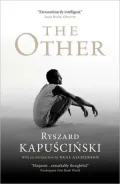
"In this distillation of reflections accumulated from a lifetime of travel, Ryszard Kapuscinski takes a fresh look at the Western idea of the Other. Looking at this concept through the lens of his own encounters in Africa, Asia and Latin America, and considering its formative significance for his own work, Kapuscinski traces how the West has understood the non-European from classical times to the present day. He observes how in the twenty-first century we continue to treat the residents of the Global South as hostile aliens, objects of study rather than full partners sharing responsibility for the fate of humankind." In our globalised but increasingly polarised world, Kapuscinski shows how the Other remains one of the most compelling ideas of our times.Synopsis
The master of literary reportage reflects on the West's encounters with the non-European throughout the ages.
The Washington Post - Francine Prose
Lucidly translated by Antonia Lloyd-Jones…Kapuscinski emphasizes the necessity of dialogue and cooperation, and he writes beautifully about those rare historical moments when people from different backgrounds "exchanged thoughts, ideas and goods, traded and did business, made alliances and unions, found common aims and values. The different, other person ceased to be a synonym for a stranger and an enemy, a threat or a deadly evil. Each person discovered in himself at least a small particle of that Other, believed in it and lived in this conviction."
Editorials
Financial Times
“Kapuscinski’s case for humanity to accept and acknowledge ‘otherness’ is cogent and invites further contemplation.”Jason Burke - The Observer
“Extraordinarily intelligent … The lectures are as erudite as they are profound … An astonishingly fresh and perceptive discussion of what identity means today.”John Leonard - Harper's
“Kapuscinski opens a sort of Pandora’s portal through which it is possible to access every imaginable Other, erotic, and exotic, sacred and profane, to define the inchoate Self.”The Independent
“An alternative journey through philosophy, history and anthropology … a powerful, quasi-religious, meditation on the power of humbling oneself in the face of the unknown.”Francine Prose
Lucidly translated by Antonia Lloyd-Jones…Kapuscinski emphasizes the necessity of dialogue and cooperation, and he writes beautifully about those rare historical moments when people from different backgrounds "exchanged thoughts, ideas and goods, traded and did business, made alliances and unions, found common aims and values. The different, other person ceased to be a synonym for a stranger and an enemy, a threat or a deadly evil. Each person discovered in himself at least a small particle of that Other, believed in it and lived in this conviction."—The Washington Post
Publishers Weekly
Kapuscinski (1932-2007) was for decades Poland's most celebrated foreign correspondent, covering some 50 countries for the Polish Press Agency. Since 1965, he focused especially on major wars and revolutions in the developing world and global South. For Poland, he was a principal source of news about the world beyond their closed society. This collection includes four of his speeches on the concept of the "Other." His observations are sobering: "an encounter with Others is not a simple, automatic thing, but involves will and an effort that not everyone is always ready to undertake." Kapuscinski's world view is idealistic and pragmatic, making room for historical forces and personal trauma while dealing with the Other in real-world and existential terms A knowing, thought-provoking and hopeful examination of a perennial theme, readers may yet be disappointed that, given his remarkable career, Kapuscinski (Travels with Herodotus) so rarely gets personal.Copyright © Reed Business Information, a division of Reed Elsevier Inc. All rights reserved.
The Observer
Extraordinarily intelligent … The lectures are as erudite as they are profound … An astonishingly fresh and perceptive discussion of what identity means today.— Jason BurkeThe Washington Post Book World
Eloquent ... remarkably thoughtful and compressed.Book Details
Published
September 1, 2009
Publisher
Verso
Pages
128
Format
Paperback
ISBN
9781844674169