
Boating - Yachting, Outdoor & Adventure Sports - General & Miscellaneous
Log in to track your reading progress.
Overview
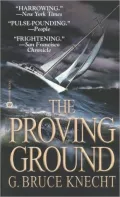
It was time for the annual historic Hobart race spanning over 600 miles from Australia to Tasmania. Among the skippers of the 115 yachts was Larry Ellison, one of the world's richest men. But disaster was on the horizon. In less than twenty-four hours, a cyclone consumed the fleet. Apocalyptic waves towering eight stories high and hurricane-force winds struck the yachts. Only forty-three vessels made it to the finish line and six men died. Here is the behind-the-scenes story of one of the worst maritime disasters in recent history and the valiant rescue effort waged. A true-life drama to rival The Perfect Storm and In the Heart of the Sea, this is the epic struggle of men risking their lives at sea -- and the survivors who would be forever changed by...Editorials
From Barnes & Noble
On December 26th, 1998, 115 sailboats left Sydney, all participants in the annual Sydney-Hobart race. An hour after the call to start, officials issued the first -- and only -- storm warning. Its effect, if any, was minimal: By the time the last yacht limped into the Tasmanian finish, 5 sailors had died, 55 were injured, and 72 boats had withdrawn from the race prematurely. Sailor-wordsmith Bruce Knecht tells the story of this unremitting tempest by focussing on the fates of three ships, including the yacht Sayonara, owned by Oracle honcho Larry Ellison. A powerful story compellingly toldWalter Cronkite
...a sailing masterpiece. His incredibly detailed research...makes for a tale more thrilling than fiction. The book is in the can't put it down category...The Perfect Storm of blue water sailboat racing.Publishers Weekly
Inspired by Charles Kuralt's "On the Road" reports for CBS News 20 years ago, Idaho journalist Johnson pitched an idea to his editor at the Lewiston Morning Tribune: a column based on the idea that a reporter "could go to the phone book, pick a number randomly, and do a story on whoever answers." More than 800 columns later, Johnson's brand of "everybody has a story" journalism has achieved a certain national notoriety, having been parodied by comic luminaries like David Letterman and Jon Stewart. In this, his first book, however, Johnson's stories fall flat. Instead of fascinating in-depth profiles, Johnson uses only brief summaries of his subjects' lives to relentlessly explain the ups and downs of his own life (his first jobs, his first divorce, his love of nature, his love of women, etc.) Unfortunately, Johnson doesn't offer the same perspective on his own story as he does, say, on Florie, a ZZ Top-loving twice-divorced mother of five. His personal insights are facile ("I love to hear about the old days and look at historical pictures"), and his reporting lacks depth ("Here was a man who, with a cultivator and other gardening implements, had made the world more beautiful"). A collection of his best columns would have been a much better way for Johnson to show how he learned that "the most important lessons are found not at the pinnacle of what we consider news, but amid the routine ups and downs experienced by everyday people." (July) Copyright 2002 Cahners Business Information.Library Journal
The Sydney to Hobart yacht race is a grueling 630-mile course down Australia's east coast. The 1998 race started with 115 boats in several ocean-racing classes leaving Sydney Harbor on a beautiful summer day. Among the contestants were Larry Ellison, owner of Oracle, and Lachlan Murdoch, the publisher. An hour after the starting gun, an inadequate storm warning was issued, and soon sailors were facing hurricane-force winds and 80' waves that turned the race into a horrific battle against the elements. Only 43 battered boats made it to Hobart. Seven were abandoned; five sank. Six sailors died, and 55 others were pulled from the water by rescuers. Knecht, a Wall Street Journal correspondent and a sailor himself, writes with great knowledge of the details of sailing and the challenges it presents to the minds and bodies of its devotees. He effectively evokes the terror, disappointment, and hopelessness of sailors whose boat has been shattered beneath them and the intense stress affecting the participants of a three-day marathon. Recommended for sports and sailing collections or for audiences who liked The Perfect Storm. [Previewed in Prepub Alert, LJ 2/15/01.] Edwin B. Burgess, U.S. Army Combined Arms Research Lib., Fort Leavenworth, KS Copyright 2001 Cahners Business Information.School Library Journal
Adult/High School-One of yacht racing's most challenging annual events, "the Hobart" begins in Sydney the day after Christmas and ends approximately two days and 630 nautical miles later in southern Tasmania. When 115 boats sailed into a cyclone in 1998, one of the worst disasters in "blue water" racing history occurred: 55 sailors had to be rescued via ship or helicopter, 5 boats sank, and 6 people died. Knecht's is the third book about the 1998 race, following Fatal Storm (McGraw, 1999), journalist Rob Mundle's account published just four months after the race, and Martin Dugard's Knockdown (Pocket, 1999). It benefits from the time that the author took to repeatedly interview survivors, examine police documents, and await the findings of the inquest. He offers up hair-raising experiences of sailors and rescuers similar to the earlier titles, but because he focuses on just three boats, the accounts seem more substantive and intimate. He also addresses the issue of responsibility more fully, relating how the Australian weather bureau, the race organizers, modern boat construction, and even some of the skippers contributed to the fatalities. Finally, he looks at the tragedy's effect on both the participants and on yacht racing in general. Readers of this and other disaster books, however, might conclude that the truly "proven" heroes are those who risk life and limb to save others engaged in personal quests for challenge or glory.-Dori DeSpain, Fairfax County Public Library, VA Copyright 2001 Cahners Business Information.Kirkus Reviews
An account of the 1998 Sydney to Hobart Race debacle, this one focusing on three of the participants, from Wall Street Journal correspondent Knecht. Anyone who sails across the Bass Strait from Sydney, Australia, to Hobart, Tasmania, will come up against some of the nastiest blue water on the globe. The annual race that has run this course for the last half-century is famously plagued by particularly cruel weather that comes in intervals of seven years—and 1998 lived up to its seventh-year billing by throwing the worst storm ever upon the contestants. Severe storm warnings were posted before and during the early hours of the event, but no one expected the 100-foot waves brought about by a handful of mad and convergent weather systems. Knecht concentrates the first half of his account on three of the participants (all of great wealth) who flew in the face of danger: Larry Ellison (founder of Oracle), Rob Kothe (a manufacturer of lifeline-throwing guns), and retailer Richard Winning. Although the author suggests that the men were variously "motivated by a kind of deeply rooted ambition that would never be satisfied," possessed of an "abiding hunger for the kind of glory that winning the Hobart could bring," or gnawed by a "sense that he was part of a generation that has never faced the kind of challenges that men should," none of the reasons adequately explains why they would tempt such horrid fate (since the Bass Strait's reputation was notorious). More commanding is Knecht's handling of the storm-lashed hours at sea, as the crews of the three boats were pounded mercilessly—sailors were lost on both the Kothe and the Winning boats—while the heroic search-and-rescuesquads pulled the lucky ones to safety. While the disaster makes for some spellbinding reading, Knecht's treatment of what prompted the sailors to take to the seas not only falls short, it falls prey to their macho swagger: "Such is love," he quips of their mortally reckless behavior. (8 pp. b&w photos, not seen) Author tourBook Details
Published
April 1, 2002
Publisher
Warner Books
Pages
368
Format
Paperbound
ISBN
9780446611855