
Join Books.org — it's free

Theology, Christian, Protestantism, General Christianity
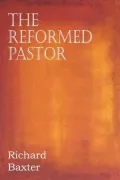
The Reformed Pastor by Richard Baxter β€” book cover

The Reformed Pastor

by Richard Baxter
Available on Bookshop Write a review

Books.org participates in affiliate programs including Bookshop.org and the Amazon Services LLC Associates Program. We may earn a commission from qualifying purchases made through links on this page, at no additional cost to you.

Log in to track your reading progress.

Overview

The subject of this treatise so nearly concerns yourselves, and the churches committed to your care, that it emboldens me to this address, notwithstanding the imperfections in the manner of handling it, and the consciousness of my great unworthiness to be your monitor.
My request is, that all the faithful ministers of Christ would, without any more delay, unite and associate for the furtherance of each other in the work of the Lord, and the maintaining of unity and concord in his churches. And that they would not neglect their brotherly meetings to those ends, nor yet spend them unprofitably, but improve them to their edification, and the effectual carrying on the work.

About the Author, Richard Baxter

Richard Baxter - English puritan divine.
Richard Baxter(1615-1691) was a prominent English churchman of the 1600s. He was a peacemaker who sought unity among Protestants, and yet he was a highly independent thinker and at the center of every major controversy in England during his lifetime.

Born in Rowton to parents who undervalued education, Baxter was largely self-taught. He eventually studied at a free school, then at royal court, where he became disgusted at what he saw as frivolity. He left to study divinity, and at age 23, he was ordained into the Church of England. Within the Anglican church, Baxter found common ground with the Puritans, a growing faction who opposed the church's episcopacy and was itself breaking into factions. Baxter, for his part, did his best to avoid the disputes between Anglicans, Presbyterians, Congregationalists, and other denominations, even convincing local ministers to cooperate in some pastoral matters. "In necessary things, unity; in doubtful things, liberty; in all things, charity," he was fond of saying.

Baxter fount himself as a peacemaker during the English Civil Wars. He believed in monarchy, but a limited one. He served as a chaplain for the parliamentary army, but then helped to bring about the restoration of the king. Yet as a moderate, Baxter found himself the target of both extremes. He was still irritated with the episcopacy in 1660, when he was offered the bishopric of Hereford, so he declined it. As a result, he was barred from ecclesiastical office and not permitted to return to Kidderminster, nor was he allowed to preach. Between 1662 and 1688 (when James II was overthrown), he was persecuted and was imprisoned for 18 months, and he was forced to sell two extensive libraries. Still, he continued to preach: "I preached as never sure to preach again," he wrote, "and as a dying man to dying men."

Baxter became even better known for his prolific writing. His devotional classic The Saints' Everlasting Rest was one of the most widely read books of the century. When asked what deviations should be permitted from the Anglican Book of Common Prayer, he created an entirely new one, called Reformed Liturgy, in two weeks. His Christian Directory contains over one million words. His autobiography and his pastoral guide, The Reformed Pastor, are still widely read today.

Reviews

There are no reviews yet. Log in to write one.

Book Details

Published
February 1, 2013
Publisher
Bottom of the Hill Publishing
Pages
184
Format
Paperback
ISBN
9781612038346

More by Richard Baxter

Similar books