
Politics & Social Issues - Fiction, Thrillers
Available on Bookshop
Write a review
Books.org participates in affiliate programs including Bookshop.org and the Amazon Services LLC Associates Program. We may earn a commission from qualifying purchases made through links on this page, at no additional cost to you.
Log in to track your reading progress.
Overview
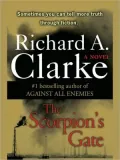
The insider whose warnings about terrorism on U.S. soil went unheeded-and whose book Against All Enemies rocketed to the top of bestseller lists-now presents his first novel: an all-too-believable story of politics, oil, espionage, and the earthshaking consequences that may lie at the end of the road ahead.Editorials
Gary Hary
Some readers of The Scorpion's Gate will happily settle for a rapid-deployment plot and political intrigue high and low. Airport sales should make it a success. But a more thoughtful audience will find itself required to give some thought to what the United States is and is not doing in the most volatile region in the world. If Clarke does nothing else but cause some readers to question our ludicrous reliance on unstable oil supplies, wonder whether we have even begun to understand Islamic culture, begin to demand a more subtle and layered approach to the Middle East, doubt our ability to export democracy at the point of a bayonet, or gain maturity in foreign affairs, he will have done a service.— The Washington Post
Michiko Kakutani
Why has Mr. Clarke turned to fiction as a venue for his arguments? No doubt it's a way to say - or imply - things about the Bush administration that he can't quite come out and say in an essay, as well as a way to satirize the intelligence bureaucracy and neo-conservative policy making. It's also a way for Mr. Clarke to dramatize his arguments and try to reach a broader audience.— The New York Times
Publishers Weekly
At its most simplistic, the plot of Clarke's fiction debut pits an American intelligence analyst, a British station chief, a Manhattan newspaper reporter and a former Al Qaeda leader-turned-democracy lover against an evil oil-grubbing U.S. secretary of defense and his Saudi pals whose sinister plan could plunge us into WWIII. Preventing it from becoming a James Bond-style knockoff is the former White House adviser's seasoned knowledge of Middle Eastern geopolitics and his insider's understanding of how things work in the intelligence communities. Unabridged, it poses the daunting aural task of trying to keep track of dozens of characters; a multiplicity of political agenda; constantly shifting locations, schemes and counterschemes; not to mention the deciphering of presumably authentic yet perplexing wonkspeak. A judiciously abridged, less complex story may have made for a more accessible audio version. Reader Dean's eloquent locutions help to clear things up a bit, and he does leaven some of Clarke's more weighty didactic passages. But the author has painted his heroes and villains in primary colors, and Dean follows the numbers a bit too closely. His analyst protagonist speaks in resonant tones that echo truth, justice and the American way. The station chief delivers his plucky Brit lines through a stiff upper lip. Dean's voice develops a harsh edge for the ill-tempered, arrogant defense secretary, twists into a whining mew for his unctuous assistant and slips into a slithery near-hiss for the smarmy Saudis. Too bad the characters' personae aren't a little less obvious and their machinations a little more. Simultaneous release with the Putnam hardcover (Reviews, Aug. 1). (Nov.) Copyright 2006 Reed Business Information.Library Journal
The Middle East is falling apart. Partially owing to its own greed, the House of al-Saud has fallen in a coup, and the royal family is sent scrambling. A new country-Islamyah-rises out of the ashes of Saudi Arabia and threatens not only to cut off oil supplies to the world but seems to desire to spread its fundamentalist version of Islam to other Arab countries believed to have fallen under the spell of American dollars. The "scorpions" who come to topple this new government must be stopped at an impregnable "gate," one that may very well lead to nuclear warfare. Clarke has been involved with the intelligence services of the United States since the Nixon administration, and he has often sounded a largely ignored alarm against the weaknesses of American power. His first book, Against All Enemies, made powerful statements critical of American policy, but Scorpion's Gate, set in 2010, offers a chilling vision of what might happen if our dependence on Arabian oil shapes our political reactions to Middle East realities. Many of the characters give extensive monologs, offering Clarke the opportunity to express his personal feelings, which are sure to antagonize many listeners. Robertson Dean is a master at handling the difficult Islamic names, accents ranging from Chinese to British, and at keeping the action moving at a breathtaking pace. Highly recommended to all libraries.-Joseph L. Carlson, Allan Hancock Coll., Lompoc, CA Copyright 2006 Reed Business Information.Kirkus Reviews
A reverse look, in the form of an intriguing, sophisticated thriller, at the conventional view of Middle Eastern terrorist operations, from someone who should know. Clarke, the presidential counter-terrorism advisor at the time of the 9/11 attacks, whose 2004 book, Against All Enemies, criticized harshly the Bush administration's handling of the war on terror, here poses the question: What if the royal House of Saud fell to revolution after America's pullout in Iraq, and in its place a viable fundamentalist state called Islamyah emerges, ruled by a Shura Council and vulnerable to terrorist action by Iran? The new Islamic government is led by an idealist named Abdullah bin Rashid, who recalls younger brother Ahmed from his medical residency in Canada to work in a hospital in Manama, Bahrain, in order to be Abdullah's "eyes and ears in the nest of vipers across the causeway"-that is, Iran. A series of troubling events puts the heads of British Intelligence and American officials on alert. Explosions occur in Bahrain, attributed to the Iranian Revolutionary Guards, or Qods Force, and Chinese medium-range ballistic missiles have been mysteriously moved to Islamyah. Ahmed learns that a liquid natural-gas tanker in the Persian Gulf harbor is targeted for explosion by the Qods and leaks the information to sharp-shooting American reporter Kate Delmarco. These events are falsely blamed on the Islamyah regime, British Intelligence officer Brian Douglas learns. Who is really behind the destabilizing attacks, and why? Secretary of Defense Henry Conrad, committed to reinstalling the Sauds, seems to have cut a secret deal with the Iranians, although Tehran proves that it, too, can doublecross. The binRashid brothers vindicate themselves in a chapter that sets forth measures to bring peace to the region. Short on blood and guts, yes, but long on thoughtful, prescient analysis of realignments of power.Book Details
Published
October 25, 2005
Publisher
Penguin Group (USA)
Pages
336
ISBN
9781101205617