
Teaching - English Language, Language Policy, Education - Philosophy & Social Aspects, Language & Politics, Multicultural Education, Bilingual Education
Log in to track your reading progress.
Overview
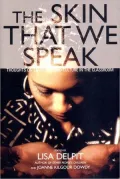
From the MacArthur Award- winning author of Other People's Children, a collection that gets to the heart of the relationship between language and power in the classroom. A powerful and sophisticated reminder that words can indeed do as much damage as sticks and stones, The Skin That We Speak takes the discussion of language in the classroom beyond the highly charged war of idioms—in which "English only" really means standard English only—and presents today's teachers with a thoughtful exploration of the varieties of English we speak and the layers of politics, power, and identity those varieties carry. Edited by MacArthur Fellow and bestselling education author Lisa Delpit and education professor Joanne Dowdy, the book includes an extended new piece by Delpit herself, as well as groundbreaking new work by Herbert Kohl and Gloria Ladson-Billings, and classics by Asa Hilliard and Jules Henry. Award-winning educator Victoria Purcell-Gates looks at language-based assumptions about poor Appalachians and Schuaib Meacham follows the very different fates of two bright young African American teachers-in-training, one of whom speaks "standard" English and one of whom speaks in school as she has been taught to speak at home. As children are written off in our schools because they do not speak formal English, and when class- and race-biased language used to describe those children determines their fate, The Skin That We Speak offers a cutting-edge look at crucial educational issues.Author Biography: MacArthur Fellow Lisa Delpit received the award for Outstanding Contribtuion to Education in 1993 from the Harvard Graduate School of Education. She currently holds the Benjamin E. Mays Chair of Urban Education Leadership at Georgia State University in Atlanta, Georgia. Joanne Kilgour Dowdy is the Assistant Director at the Center for the Study of Adult Literacy and assistant professor at Georgia State University.
Editorials
Publishers Weekly
These 13 essays by teachers offer firsthand perspectives on the provocative issue of dialects in the classroom a controversy sparked by the notorious ebonics debates of the 1990s. Delpit (Other People's Children) and Dowdy, education professors at Georgia State University, have gathered both new and previously published pieces by distinguished educators like Herbert Kohl, Jules Henry and Victoria Purcell-Gates. The collection opens with personal essays by two teachers Dowdy, schooled in Trinidad, and Ernie Smith, from South Central Los Angeles who describe their own struggles to come to terms with the formal language of school and the nonvalidated language of home. Other essays move into the classroom, looking at how different teachers address questions of dialect and how students experience their instruction. The classrooms described range from kindergarten to high school to teacher training. While most of the essays focus on African-American language, there's also a piece by Michael Stubbs on students with working-class English or Scottish vernaculars in the U.K. and an article by Purcell-Gates that follows a poor white Appalachian boy in the public school system. Although these lucid, accessible pieces speak most directly to teachers and would-be teachers (including specific suggestions for instruction), the issues are broad enough to attract more general readers, especially parents concerned about questions of power and control in public schools. (Mar. 1) Copyright 2001 Cahners Business Information.Library Journal
When Delpit's 11-year-old daughter transferred from a small private school as its only African American female to a predominantly African American public-charter school, she switched dramatically from Standard to African American English. For her part, Dowdy was forced by her mother to imitate British English while growing up in Trinidad. Using these experiences as context, MacArthur award winner Delpit (Other People's Children; Ctr. for the Study of Adult Literacy; Georgia State Univ.) and Dowdy (Georgia State Univ., Atlanta) have gathered a series of essays exploring the link between language and identity and between language and cultural conflict. The essays written by Herbert Kohl, Gloria Ladson-Billings, Asa Hilliard, and Victoria Purcell-Gates, to name a few differ dramatically in approach and opinion, so it is hard to say what case they present regarding the use of Ebonics (or African American English) in schools. They are also divergent in quality; some include superficial comments that would not stand up under scrutiny, while others are better developed and include more cohesive remarks. Finally, the lack of references for most of the reminiscences and the absence of works beyond 1997 in the two-page selected reference list may limit the audience. Libraries that already own the more coherent and convincing Voices from the Language Classroom (edited by Kathleen M. Bailey & David Nunan) and Ian Tudor's The Dynamics of the Language Classroom both from Cambridge may skip this title, as it contributes little to this important debate. Leroy Hommerding, Fort Myers Beach P.L. Dist., FL Copyright 2001 Cahners Business Information.Book Details
Published
February 1, 2002
Publisher
New York : New Press, c2002.
Pages
256
Format
Hardcover
ISBN
9781565845442