
Irish History, Peoples & Cultures - Biography, European Studies, British & Irish Literary Biography, World Literature
Log in to track your reading progress.
Overview
Belfast is a city that seems eternally scarred by the jagged, confusing lines of its sectarian map, but Ciaran Carson remembers and invents the city in which he grew up as a fractured, haunted urban labyrinth. It contains the city of his childhood, of a dying industrialism.Editorials
Publishers Weekly -
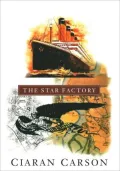
The playful, enchanting contiguities of Irish poet Carson's memoir (which is as much a portrait of the city of Belfast as it is of one of its denizens) are just as skilled as those in Nabokov's standard, Speak, Memory, and are even somewhat bolder. One chapter is linked to another by the resonance of a simple word, as if Carson is doing a kind of poet's math (e.g., the study of small photographs leads to a chapter on childhood stamp collecting, which leads to a discussion of the General Post Office rebellion that led to a divided Ireland, a divided Belfast and, ultimately, to Carson's fractured and carefully reconstituted experience). Therein, however, lies the problem: the memoirist is forced to rely on tricks to give shape and life to a story that resists both. It's not Carson who's to be blamed for this, however, but his subject, the city of Belfast (where Carson grew up a Catholic) and the troubles, economic and political, that have bedeviled it for decades. However lovingly recalled--Radio Ulster, the building of the Titanic--and no matter how imaginatively re-created, as with the Star Factory of the title (a Belfast industrial structure "long since demolished" but leaving "an interactive blueprint; not virtual, but narrative reality"), Belfast itself cannot be stirred. It seems dead. Unlike Nabokov, who had a revolution and exile to write about, Carson is trapped in a city he's unable to turn away from, its dark, smoking decline reflected in his eyes and extraordinary prose. Among the flood of Irish memoirs these days, none are as dazzlingly written as this, and none remain so solidly entrenched in the sovereign space of the imagination. (Sept.)Kirkus Reviews
A whimsical, witty romp through the streets of Belfast. Carson, author of numerous books on Ireland, has contrived an imaginative series of vignettes that illuminate his native city, hangout by hangout. Chapters begin with the description of an apparently random object or place—a chesterfield sofa, in one example—and loosely tie stories, memories, and folklore around that motif (a master of English and Irish alike, Carson can spend entire pages explaining the origins and meanings of place names). The son of a postman (Carson says he felt that as an adult, he should collect stamps to honor this legacy), the author recalls his father as a quirky and engaging character who carried on conversations while in the outhouse and corresponded with people all over the world in Esperanto, just to escape the tyranny of the English language. The book is interspersed with legends and folklore, some of which are wonderfully amusing, most of which Carson translated himself from the Irish. He also, quite naturally, manages to parlay some facts; our Titanic-crazed culture should thrill to read the chapter on the shipþs construction in the docks of Belfast. (In a footnote, he tells us his family's personal connection to the doomed vessel: his father was born the day she sank.) While the tone of most of the book is lighthearted (as when Carson reveals to us the titles of the books he keeps in his privy), there are also more serious undertones of violence and the IRA—mentioned only occasionally and always in passing when referring to some local landmark. Violence for Carson is just one part of the Belfast landscape—not to be dwelt upon, but not to be ignored. Carson'simaginary "star factory," a place "where words were melted down and like tallow cast into new molds," is freshly realized here. Beautifully written, with deep humor and a strong evocation of a very personal Belfast.Book Details
Published
May 4, 2012
Publisher
Skyhorse Publishing
ISBN
9781611456554