
Fiction, Fiction Subjects, Peoples & Cultures - Fiction
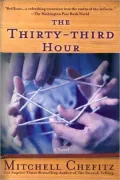
Available on Bookshop
Write a review
Books.org participates in affiliate programs including Bookshop.org and the Amazon Services LLC Associates Program. We may earn a commission from qualifying purchases made through links on this page, at no additional cost to you.
Log in to track your reading progress.
Overview
The Thirty-third Hour opens at midnight Saturday, in the study of Rabbi Arthur Greenberg, the leader of the largest synagogue in Miami. The Rabbi has until 9 a.m. Monday morning, thirty-three hours, to investigate a sex ethics charge brought against one of his colleagues by a member of the congregation, Brenda, an attractive widow and the mother of an autistic son.
That colleague, Moshe Katan, an associate from Arthur's seminary days, has been leading an experimental family education program at the synagogue, bringing together parents and children to explore the stories of the Bible in new and challenging ways. Now, piled on Arthur's desk are the video and audio recordings of these sessions and Brenda's journal, which he has to review in a desperate attempt to avoid a disastrous scandal. The reader becomes judge and jury as Arthur seeks to find out what happened and, in the process, undergoes a spiritual transformation himself.
Editorials
Publishers Weekly
Brenda, a troubled, attractive congregant in Rabbi Arthur Greenberg's sprawling Miami synagogue, has made some extremely serious allegations against the iconoclastic teacher Moshe Katan, the rabbi's colleague and ex-classmate. Having invited Katan to set up a special program on family education at his temple, Greenberg has no choice but to review the pile of evidence: hours of videotaped teaching sessions, featuring Katan's highly nontraditional approach to Jewish learning. Chefitz's second installment in the Moshe Katan series (after The Seventh Telling: The Kabba'ah of Moshe Katan) is chiefly concerned with lengthy swaths of Katan's innovative instruction and interactions. For the remote, scholarly rabbi, the contrast between him and the earthy, freewheeling Katan becomes painfully obvious. (Purim, the most boisterous and joyous of Jewish commemorations, is the rabbi's "least favorite of the holidays," the synagogue "filled with unruly children.") Katan's teaching approach also cuts uncomfortably close to home, and the rabbi is forced into a series of painful ruminations that touch on his own spirituality, his marriage, the rocky relationship with his daughter and a family background both unsavory and tangled. The teachings of Moshe Katan could be helpful for those interested in an anecdotal approach to Jewish tradition. Instructive as a teaching tool but parochial as a work of fiction, the novel's tone is didactic, and the characterizations rarely rise above the level of clich?. A less lecture-like format would have made for a more engaging text. (Jan.) Copyright 2001 Cahners Business Information.KLIATT
Rabbi Arthur Greenberg is the protagonist in this fascinating journey through Judaism and the Kabbalah. Something terrible (or so he thinks) has occurred as a result of a Temple-related program. Now he must review video and audio tapes as well as a congregant's journal to determine what happened. He has a day and a half to do this. We follow his progress from the first session of a family education program, taught by an outside rabbi named Moshe who prefers that no one know he is a rabbi. This teacher's methods are not traditional yet those participating seem to respond, enjoy and learn from him. Artie is alternately fascinated and horrified, and finally convinced that perhaps Moshe is doing something right. This is for those readers who may have some familiarity with Judaism or who have a desire to learn about it. KLIATT Codes: SA—Recommended for senior high school students, advanced students, and adults. 2002, St. Martin's Griffin, 278p., Holab-AbelmanKirkus Reviews
From a Florida-based religious scholar, teacher, and novelist (The Seventh Telling, not reviewed), a gently instructive story about faith restored and community ties strengthened as a rabbi learns the truth about an event that threatens to destroy his congregation. At midnight on the Saturday of Memorial Day weekend, Rabbi Arthur Greenberg returns to his office at the Temple, the largest Liberal Jewish congregation in Miami, after a wedding. He fears he will have to spend the rest of the weekend there: Brenda Karman, a young widow who converted to marry much older Nathan, and whose son is the autistic Daniel, has made a scandalous accusation-revealed only at book's end-that, if true, will tear his congregation apart, destroy any chance the Temple has of getting the zoning change it needs, and probably threaten his tenure. Arthur's task is to review the evidence-a collection of videotapes as well as Brenda's diary entries. The tapes record the popular family program on the Torah that Moshe Katan, an old seminary classmate of Arthur's, has been conducting for a growing number of the Temple members. Recently widowed, Moshe is a charismatic teacher as well as an original thinker, and Arthur finds himself moved and impressed as he watches the tapes that begin with the Creation and end with the giving of the Ten Commandments. Despite his reservations, and critical of Moshe's methods, Arthur is soon engrossed by Moshe's fresh telling of the old stories, and as the hours pass, he finds himself reexamining his own life: the shame he felt that both his father and brother Jonah worked for the Mob; his disappointment that his daughter Tamar is a lesbian; and his failure to help Jonah'swidow and only son. Though exhausted, by early Monday morning Arthur is not only impressed with what Moshe has achieved but realizes, after seeing the last tape, that Brenda has misinterpreted Moshe's actions. A nicely crafted spiritual mystery tale that offers answers as well as redemption.Book Details
Published
January 15, 2003
Publisher
St. Martin's Press
Pages
320
ISBN
9781429971966