
Latin Americans - General & Miscellaneous, Latin America and the Caribbean - Ethnic & Race Relations, Regional Studies - Western U.S., Economic Conditions in North America & the Caribbean, Mexico - Politics & Government
Log in to track your reading progress.
Overview
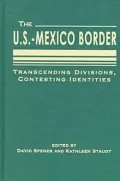
Exploring the construction of spatial lines and zones in physical, social, and academic terms, this volume presents the U.S.-Mexico border as a site from which to survey both the social and economic networks and the issues of identity and symbolism that surround borders. The editors provide a theoretical introduction to the intrinsic nature of borders, as well as an overview of current trends in borderlands studies, to serve as a framework for the contributors' case studies. A concluding section examines the implications of transcending traditional borders.Editorials
Booknews
Explores the social space defined by the political boundary between the US and Mexico, viewing the border as an ongoing, dialectical process that generates multiple borderland spaces, some of which are not located close to the official international boundary itself, but rather can be found anywhere Mexican and US national systems confront one another. Topics include economic integration on the Texas-Mexican border, competing meanings of the label "Chicano" in El Paso, and contested identities and everyday resistance in Los Angeles. Annotation c. by Book News, Inc., Portland, Or.Book Details
Published
September 1, 1998
Publisher
Lynne Rienner Publishers, Inc.
Pages
264
Format
Binding
ISBN
9781555877965