
Essays, Journalism, Politics & Government - General & Miscellaneous
Log in to track your reading progress.
Overview
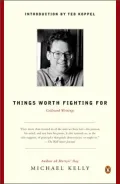
he collected articles and columns of Michael Kelly, award-winning reporter, war correspondent, columnist, and editor, whose passion for the good story and whose candor and wit made him one of the foremost journalists of our time.His career reflected myriad colors: he wrote for a large variety of publications, covering a multitude of topics-political, international, and personal-with singular insight, passion, and wit. This collection of his most memorable magazine and newspaper stories and columns-drawn from the Washington Post, New York Times, The New Yorker, The New Republic, and other publications-puts on full display the dazzling panoply of his gifts: for physical description and scene setting; for telling detail, brilliant simile, and satirical insight; for prose that is at once mathematically precise and lyrical.
Here are the searing portraits of Ted Kennedy, Jesse Jackson, H. Ross Perot, and other seminal political figures of our time that won Kelly national attention. Here are the stunning dispatches from the first Gulf War that earned him the National Magazine Award for reporting and burnished his journalistic legend. Here are the fierce columns and landmark cover stories that raised disturbing questions about Bill Clinton, Hillary Rodham Clinton, and the deeply incestuous relationship between Washington, D.C.'s political and media cultures. And here are the loving family portraits and hilarious social commentaries.
Things Worth Fighting For represents the body of work of a journalist who demonstrated time and again a surpassing talent for penetrating to the heart of the matter, for advancing far beyond the headlines and surface appearances of people and events to find their true meanings, for getting the story other writers missed and telling it with a verve few other writers could match.
Editorials
Publishers Weekly
Atlantic Monthly editor Kelly, who covered Operation Desert Storm in 1991, Arafat's return to Gaza in 1994, and Bosnia in 1995, was killed in the Iraq war in April 2003. Although he'd considered himself a dove in the Vietnam years, "I am certainly now a hawk," he declared in 2002, his war coverage having convinced him "of the moral imperative, sometimes, for war." "There are things worth dying for, and killing for," as "every twelve-year-old" in Bosnia already knows. While Kelly's war reportage dominates this collection of his columns (mostly published in the Washington Post, the New Yorker and the New Republic in the 1990s), the volume also covers domestic culture and politics. Kelly's signature format was the character (or lack of character) sketch, where he'd reduce larger-than-life politicians to a decidedly human scale. Jesse Jackson "jets around the world as secretary of his own state of mind." Ross Perot was America's "first fusion-paranoia candidate for the presidency." When Bob Dole makes a speech, his phrases interrupt each other "like a call-waiting system gone awry." Beyond mere Beltway-insider cleverness, Kelly argued for a return to core American values like courage, honesty and love of country. We can't go back to being "square"-it's quite as impossible as "revirginizing"-but being patriotic and conservative could be cool again, Kelly suggests. The book's strength lies in the impact of having Kelly's war essays in one place, in chronological order, giving them a power they didn't have when sprinkled weekly in the press. (On sale Mar. 29) Forecast: The publisher plans publication events in Boston and New York, and national advertising, but without Kelly to promote the book, sales may be less than hoped for. Copyright 2004 Reed Business Information.Library Journal
"Michael Kelly, the editor at large of The Atlantic Monthly and for three years its editor in chief, was killed on the outskirts of Baghdad while covering the Iraq war as a correspondent for this magazine." So began the obituary for Kelly in the June 2003 issue of the Atlantic. What we cannot know, of course, is the full effect his loss will have on American journalism. His dispatches from Desert Storm, for example, compiled under the title Martyr's Day, immediately joined the ranks of classic war reporting. His analyses were cogent, trenchant, and, interestingly, conservative. This posthumous collection of columns, to be released on the first anniversary of Kelly's death, originally appeared in the Atlantic and various newspapers. The columns display not only expansive interests (which ranged from the Middle East and presidential politics to the national diet) but also a journalistic eye that encompassed telling details usually overlooked by other reporters. Nine days after 9/11, Kelly remarked, "Life goes on, and life is good." Such optimism certainly undergirds these pieces. Recommended for public and academic libraries.-Ari Sigal, Catawba Valley Community Coll. Lib., Hickory, NC Copyright 2004 Reed Business Information.Kirkus Reviews
A splendid collection of newspaper and magazine pieces by the late Kelly (Martyr's Day, 1993), the first "embedded journalist" to die in the latest Iraq war. Kelly, 46 at the time of his death in April 2003, was no stranger to action; famously, he scampered off to Iraq as a freelance writer in the first Gulf War after a New Republic editor issued a challenge, "We'll use your stuff if you can be in Baghdad when the bombs drop." His reports from the Desert Storm front are jarring and unglamorous: in one of them, he remarks, "The days of delusion are dead in Baghdad. The city has fatally discovered the obvious: a contest between a third world semipower fighting World War II and a first world superpower fighting World War III is no contest at all." Everyone in the city knew this, it appears, but Saddam Hussein and his closest aides, who, Kelly adds, went on speechifying about how the Allies' "defeat will be certain" until the bitter end. And that end was bitter indeed; one of Kelly's reports describes a Kuwaiti man moving carefully from body to body in a field full of dead Iraqis, spitting in the face of each, then "heading up the road to spit on the next of the waiting dead." Kelly's reports on the walking wounded and the strangely undead are just as good, such as his celebrated (and in some circles infamous) portrait of Sen. Edward Kennedy ("The skin has gone from red roses to gin blossoms. . . . The Chiclet teeth are the color of old piano keys"), his profile of political fixer David Gergen, and his wonderful account of Bob Dole's last stand, when, battling Bill Clinton for the presidency in 1996, he "waged what one senior campaign official called 'a renegade campaign,' running as muchagainst his own operation as against Clinton." Against these highlights, some of Kelly's curmudgeonly, conservative cultural pieces pale. But the highlights are brilliant indeed, showing that American journalism lost much with Kelly's passing.Book Details
Published
March 29, 2005
Publisher
Penguin Books
Pages
448
Format
Paperback
ISBN
9780143034933