
Fiction - Animals - General & Miscellaneous, Bible - Stories, Fiction - Religion & Beliefs, Fiction - Family Life
Log in to track your reading progress.
Editorials
Publishers Weekly
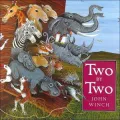
Without mention of Noah or God (except in an endnote), Winch (Keeping Up with Grandma) imagines the biblical story of the ark via the eyes of the animals caught in the torrential rains. As various beasts seek higher ground and watch their habitats disappear under water, most find the sole haven in the storm-a wooden vessel helmed by a kindly bearded man and his wife. "Finally, there was only one dry, warm place left." (All along, keen-eyed readers have observed the ark being built in the background of Winch's dramatic oil paintings.) At book's end, "Light and warmth and freedom [has] returned to the earth," and the animals begin to exit the ark-two by two. An author's note places Noah's tale in the context of a larger body of great flood stories found in "more than three hundred cultures." While this additional information gives the text a certain universality, the endnote, along with the assumptions Winch makes of his readers, dilutes the biblical importance of the story and its potential impact. Winch's artwork depicts vast and varied landscapes; however, his animal figures are unevenly rendered, some more anthropomorphic than others. Ages 4-8. (Sept.) Copyright 2004 Reed Business Information.Children's Literature
Winch tells his very simple version of the tale of the Flood from the animal's point of view. In large print, a few words per page, he describes the arrival of the deluge that covers the earth. "Finally, there was only one dry, warm place left." We do not see anything of the life on the Ark, only the day the sun shines again and "Light and warmth and freedom returned to the earth." Although the animals are painted naturalistically in oils, the double-page scenes are expressionistic in their emotional content. From the title page depiction of a rhinoceros in the pouring rain with what may be a tidal wave approaching, the landscapes become increasingly inundated and dark until only the ark remains visible atop the water. The contrast with the bright sunshine of the final pages when a crowd of animals leave the ark to walk out onto a verdant floodless landscape is striking. There are no humans except for the double portrait of an old couple gazing at the golden horizon. The author adds a note on the "great flood" story in many cultures and the endless search for evidence to prove them. Don't miss the almost tactile end-papers. 2004, Holiday House, Ages 3 to 7.—Ken Marantz and Sylvia Marantz
School Library Journal
PreS-Gr 3-Winch's flood story begins in an idyllic world, where animals spend their time looking for "food, companions- and a warm place to sleep." The only blight in their existence is the vast clear-cut area that surrounds their waterhole. The growing bulk of the ark in subsequent illustrations suggests that the trees have been felled for its construction. Without warning, a storm begins. The bewildered creatures try to cope as the waters rise. They must board the ark as it floats on the expanding sea. When the rain stops, they disembark. Without explanations for the destruction or its resolution, readers might conclude that such a catastrophe could recur any time. An unnamed man and woman appear in the single illustration showing the ship's interior. Noah is mentioned only in the appended author's note, and the book rests on the assumption that youngsters know this story. Many of Winch's oil paintings are striking, including the endpapers, which depict stones of various sizes and textures. This retelling's strongest asset is its artwork, and it may be hard to justify another flood variant for most collections.-Kathy Piehl, Minnesota State University, Mankato Copyright 2004 Reed Business Information.Kirkus Reviews
The endless flow of new versions of the Noah's Ark story continues without ebb, but this entry follows a different course than most. This version is told simply, with few words, and never mentions Noah or the Ark or even God. The succinct text focuses on the animals themselves, who seek shelter from the great storm within the Ark, which gradually takes shape on the beach as the storm is approaching. Noah is shown peeking out of the Ark windows and in one full illustration with his wife, but the gathering storm and the gathering animals are the main focus. The rather abrupt conclusion shows the animals disembarking into a new world of "light and warmth and freedom" with no humans in sight. Winch's oil paintings are highly detailed and creative in both perspective and composition, though sharp-eyed children are bound to notice that several animals on the cover and within aren't paired up "two by two." (author's note) (Picture book/nonfiction. 3-6)Book Details
Published
September 30, 2004
Publisher
Holiday House
Pages
32
Format
Hardcover
ISBN
9780823418404