
Children - Fiction & Literature, Fiction - People, Places & Cultures
Log in to track your reading progress.
Overview
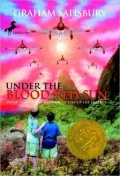
Tomi was born in Hawaii. His grandfather and parents were born in Japan, and came to America to escape poverty.
World War II seems far away from Tomi and his friends, who are too busy playing ball on their eighth-grade team, the Rats.
But then Pearl Harbor is attacked by the Japanese, and the United States declares war on Japan. Japanese men are rounded up, and Tomi’s father and grandfather are arrested. It’s a terrifying time to be Japanese in America. But one thing doesn’t change: the loyalty of Tomi’s buddies, the Rats.
Tomikazu Nakaji's biggest concerns are baseball, homework, and a local bully, until life with his Japanese family in Hawaii changes drastically after the bombing of Pearl Harbor in December 1941.
Editorials
Publishers Weekly -
Salisbury Blue Skin of the Sea again invokes a Hawaiian setting for this novel, which chronicles the trials of a Japanese American boy and his immigrant family in 1941. Tomi's fisherman father and housekeeper mother work hard to support Tomi, his younger sister and grandfather in their cramped servants' house. While he embraces everything about being American, including a passion for baseball, Tomi struggles to find some middle ground between his modern life and the nationalism and traditional values his parents and Grandpa try to impart. But as WWII intensifies and Pearl Harbor is bombed, Tomi's family faces racism, violence and hardship at every turn. Tomi's father and grandfather are taken away and incarcerated, leaving Tomi to worry if he can perform honorably as man of the house. Salisbury skillfully describes Tomi's emotional highs and lows, and has a particular knack for realistically portraying the camaraderie and dialogue between boyhood chums. The slow-evolving plot drags in a few spots especially the play-by-play descriptions of baseball games, but readers are rewarded with steadily building dramatic tension in the novel's second half and a satisfyingly open-ended finale. Ages 10-up. Oct.The ALAN Review -
Tomi, a first-generation Japanese American, spends his day attending school, helping his father with the pigeons, and playing baseball with his eighth-grade friends. But, this is Hawaii and it's 1941. The bombing of Pearl Harbor by the Japanese upends Tomi's life. His father and grandfather along with other Japanese men are imprisoned, and Tomi must protect and provide for his family. Most importantly, Tomi must not "disgrace his family" despite the treatment he and other Japanese immigrants receive as a result of the attack. Fortunately, his friends, the Rats, stand by him and Tomi doesn't have to face the challenges alone. Salisbury's second novel is not only a timeless tale of the loyalty of friends, but it also explores both cross-generational and cross-cultural issues. An easy read, Under the Blood-Red Sun is nevertheless challenging in its content and subject matter. This novel would work well in either an English or a social studies class.School Library Journal
Gr 5-8-September, 1941 is a time of increasing confusion for Tomi Nakaji, 13, who lives on the island of Oahu. As if his gruff, stroke-slowed grandfather, who insists on waving his Japanese flag around the yard, isn't enough, he has to contend with Keet Wilson, the bully next door. From a treetop, Tomi and his haole white best friend, Billy, witness in disbelief the bombing of Pearl Harbor. Tomi finds the horrors personalized as his father, a poor fisherman, and later his grandfather are arrested and his father's fishing partner is killed. Tomi assumes responsibility for the family honor and katama, or samurai sword. Racial/ethnic tension is subtly portrayed throughout the novel, but escalates following the Japanese attack- Tomi's mother loses her job as a housekeeper and Billy ``disappears'' for awhile, though he returns as a loyal and helpful friend. Tomi faces his fears and becomes assertive enough to stand up to Keet without besmirching his family's honor and risks his life to see his imprisoned father. Character development of major figures is good, the setting is warmly realized, and the pace of the story moves gently though inexorably forward. While it may be a bit more aimed than pitched, the ending leaves readers confident that the Nakajis will survive.-Joel Shoemaker, Southeast Jr. High School, Iowa City, IABook Details
Published
December 1, 1995
Publisher
New York : Delacorte Press, 1994.
Pages
256
Format
Paperback
ISBN
9780440411390