
Literary Criticism
Available on Bookshop
Write a review
Books.org participates in affiliate programs including Bookshop.org and the Amazon Services LLC Associates Program. We may earn a commission from qualifying purchases made through links on this page, at no additional cost to you.
Log in to track your reading progress.
Overview
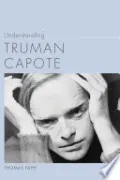
In Understanding Truman Capote, Thomas Fahy offers a way to reconsider the author's place in literary criticism, the canon, and the classroom.Synopsis
"Does an admirable job of examining Capote as a writer whose work reflects America of the late 1940s and 1950s more deeply than previously thought." —Ralph F. Voss, author of Truman Capote and the Legacy of "In Cold Blood" Truman Capote—and his most famous works, In Cold Blood and Breakfast at Tiffany's—continue to have a powerful hold over the American popular imagination, along with his glamorous lifestyle, which included hobnobbing with the rich and famous and frequenting the most elite nightclubs in Manhattan. In Understanding Truman Capote, Thomas Fahy offers a way to reconsider the author's place in literary criticism, the canon, and the classroom. By reading Capote's work in its historical context, Fahy reveals the politics shaping his writing and refutes any notion of Capote as disconnected from the political. Instead this study positions him as a writer deeply engaged with the social anxieties of the postwar years. It also applies a highly interdisciplinary framework to the author's writing that includes discussions of McCarthyism, the Lavender Scare, automobile culture, juvenile delinquency, suburbia, Beat culture, the early civil rights movement, female sexuality as embodied by celebrities such as Marilyn Monroe, and atomic age anxieties. This new approach to studying Capote will be of interest in the fields of literature, history, film, suburban studies, sociology, gender/sexuality studies, African American literary studies, and American and cultural studies. Capote's writing captures the isolation, marginalization, and persecution of those who deviated from or failed to achieve white middle-class ideals and highlights the artificiality of mainstream idealizations about American culture. His work reveals the deleterious consequences of nostalgia, the insidious impact of suppression, the dangers of Cold War propaganda, and the importance of equal rights. Ultimately, Capote's writing reflects a critical engagement with American culture that challenges us to rethink our understanding of the 1940s and 1950s.Book Details
Published
June 18, 2014
Publisher
Univ of South Carolina Press
Pages
275
ISBN
9781611173420