
World Literature, Fiction Subjects, Peoples & Cultures - Fiction
Log in to track your reading progress.
Overview
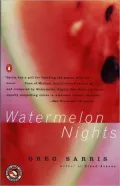
In the tradition of Louise Erdrich and Sherman Alexie, a multi-generational epic novel about the love and forgiveness that keep an American Indian family together. Told from the points of view of Johnny Severe, his grandmother, Elba, and his mother, Iris, Watermelon Nights reaches to the past and toward the future to uncover the secrets behind each of these characters' extraordinary powers of perception. When twenty-year-old Johnny contemplates leaving his grandmother's house for the big city, he discovers there's more than his floundering used-clothing store keeping him where he is. As the novel shifts perspectives, tracing the history of the tribe, we learn how the tragic events of Elba's childhood, as well as Iris's attempts to separate herself from her cultural roots, make Johnny's dilemma all the more difficult, and his choices more crucial.Editorials
Publishers Weekly -
Author and academic Sarris returns to the polyglot milieu of his short-story collection, Grand Avenue, in this witty, highly textured first novel. In fact, the short stories of the prior book form a kind of prequel to the current work. Filipinos, Chicanos, Native Americans and Anglos mingle again in the neighborhood of Santa Rosa, Calif., a place of bootleg liquor, dancehalls and cockfights, where 20-year-old Johnny Severe and his family, Waterplace Pomo Indians, struggle to keep solvent by working for canneries, department stores or dairy farms. Johnny's used-clothing business is not doing well, and he longs to get away to the city. Exacerbating his restlessness is the change in the community's social climate: the Pomos are seeking federal recognition as a tribe, and everyone is trying to be more Indian than his or her neighbor. The irony is, of course, that all of them are mixed bloods, descended from the same Indian woman, Rosa, and the Mexican general who raped her. The genealogical research necessary for federal recognition and the story of Rosa serve as springboards to Sarris's aim of conveying the history of the tribe, allowing shifts in narration from Johnny to his grandmother, Elba, and his mother, Iris. Sarris handles multiple perspectives well, in a manner akin to Louise Erdrich. He is as adept at writing from a female perspective as was Michael Dorris. This is a rich, satisfying tale of plain folks trying to survive in an unfriendly social milieu, and of the ties that bind them, sometimes too closely, together. Author tour. Sept. FYI: Sarris is chairman of the Federated Coast Miwok Tribe.KLIATT
Sarris has been compared to the late Michael Dorris, with good reason. His subject matter is contemporary Native Americans on the West Coast, struggling to make sense of their heritage and their existence. He writes well, his characters seem real, and his story is emotionally affecting. Watermelon Nights is a story in three parts. Each part could stand alone and be useful in discussions of discrimination, poverty, American history, literature, or Native American culture. The first part is about Johnny, a young Pomo Indian, trying to organize the scattered members of his small tribe and galvanize them into improving their lives. Themes in this part include individual identity, cultural identity, and homophobia. The second part, the strongest part, tells the story of Johnny's grandmother, Elba, in her childhood and young womanhood. It is a story of grinding, unrelenting poverty, alcoholism, illness, and the dismal, miserable job of surviving in a dismal, miserable environment, surrounded by unfriendly, suspicious people. It is not at all a happy story, but an extremely engrossing and moving one, well worth reading. The third part is about Iris, Elba's daughter and Johnny's mother, as a teenager. Elba manages to provide a decent life for her daughter and Iris has many typical teenage concerns, but discrimination and the pull of tradition always get in the way, of course. The traditions of the tribe are an important theme in all three parts, as is the strength of family ties. Highly recommended. KLIATT Codes: SA—Recommended for senior high school students, advanced students, and adults. 1998, Penguin, 425p, 22cm, $13.95. Ages 16 to adult. Reviewer: Barbara Shepp; Chevy Chase,MD, May 2000 (Vol. 34 No. 3)Kirkus Reviews
An ambitious, meticulously detailed story about modern Native American life, focusing on the struggle of a small, disenfranchised tribe in modern-day California to reclaim its heritage and identity. Sarrisþs debut novel, like the tales in his collection, Grand Avenue (1994), is set in Santa Rosa, a small town on the California coast thatþs been the home of the Waterplace Pomo since the tribe was forced off of its traditional lands. One of the many ironies at work here is that, while the local whites only guardedly accept the Pomosþ presence, the town had in fact been founded by a Pomo (Rosa), who, more than a century before, gathered the remnants of the tribe together after it had been devastated by Mexican raiders. In present-day, it is Elba, an elderly woman, who has quietly labored to preserve Pomo traditions and the sense of tribal identity. Her 17-year-old grandson Johnny, who ekes out a living selling secondhand clothes, has become active in the battle to secure federal recognition for the Pomo so they can qualify for federal assistanceþand even, perhaps, reclaim some of their land. Johnnyþs mother, Elba's daughter Iris, is furiously opposed to all of this, having spent her life trying to gain acceptance in white society. The story is narrated in turn by each of these three characters, allowing Sarris (himself the chairman of the Federated Coast Miwok tribe in California) to illuminate the varied ways in which Native Americans have tried in modern times to deal with the tribal devastation theyþve undergone. Elba is the dominant figure here; her memories, both of her people's past and traditions and of her own tragic past, are haunting. Theresolution, in which the three family members and the varied (and vividly rendered) tribe members begin to draw together in the wake of violence, is both subtle and deeply moving. Despite a pace that sometimes dawdles, Sarris's vigorous prose and robust characters make for a distinctive work, marking the debut of a singularly talented novelist. (Author tour)Book Details
Published
November 25, 1999
Publisher
Penguin Putnam Inc
Pages
432
Format
Paperback
ISBN
9780140282764