
Fiction - Animals - General & Miscellaneous, Birds, Fiction - Animals - Birds, Fiction - General & Miscellaneous
Log in to track your reading progress.
Overview
Poetic text and stunning paintings tell the story of a wood thrush that makes the long migration between New England and Central America. At each end of the journey is a boy who watches and waits, protecting the bird's nesting place until it returns. Neither boy knows that his love of the thrush's sweet song links him—like a brother—to another boy across the world, a boy who doesn't even speak the same language.
Includes an author's note that details wood thrush migration and habitat protection.
While a boy in North America urges his father not to cut down the trees where the wood thrush lives, a boy in South America awaits the return of the bird that he calls "la flauta" for its flute-like song.
Editorials
Publishers Weekly
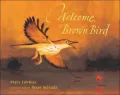
Every fall, a wood thrush says goodbye to a boy in the northern hemisphere and flies thousands of miles south to greet a boy in the southern hemisphere. Both boys wait every year for the bird, and with childlike earnestness both convince their fathers not to clear trees in the woods where the bird sings. The boy in the distant country speaks Spanish, but he says the same things as his English-speaking counterpart in the North his words ("La flauta,... est aqu ") are perfectly clear in context. Ray (Red Rubber Boot Day) has conceived an expressive metaphor for the interconnectedness of living things, even those unknown to each other: "Neither boy knew where the brown bird went," the text ends. "Only the bird knew they were brothers." Sylvada (A Symphony of Whales) paints a series of landscapes in which mood and light predominate. In pointing up the similarities between the boys, their fathers and their farms, the images leave out particulars of textures and facial features; and the same mustard, brown and sky-blue palette is used for both settings. Within the story, the ending is a happy one one boy's happiness always follows the other's loss but a sober afterword explains Ray's concern for the headlong destruction of songbird habitats. Its pared-down focus on a single issue makes the book an effective discussion-opener for younger listeners. Ages 3-7. (Apr.) Copyright 2004 Reed Business Information.Children's Literature
Fathers listen to their sons in Welcome, Brown Bird. In the spring and summer, a boy in the north hears a wood thrush singing in a stand of hemlock trees. When the weather changes, the bird flies for twenty-eight days till it reaches a rainforest in the south. All through the fall and winter, it sings for another boy. When the fathers prepare to harvest the trees, both boys in their different parts of the world convince the men to spare the bird's home. Author Mary Lyn Ray tells this story of global connectedness in spare, lyrical language that befits the small bird's "silvery circular song." Peter Sylvada's oil paintings beautifully reveal the thrush amongst the golds, browns and blues of two very different landscapes. 2004, Harcourt, Ages 4 to 8.—Mary Quattlebaum
School Library Journal
Gr 2-4-Unbeknownst to one another, two boys living in distant places share a common bond in their affection for the small brown wood thrush that migrates between their countries each year. The quiet, two-part story with its conservation message begins with an unnamed boy who "lived at the edge of a hemlock woods." Each day in April he watches the world turn green and listens for the thrush's song that announces its arrival. He persuades his father not to clear trees for a new cornfield so that the bird might still have its seasonal home. Ray's reverential text is set on creamy yellow pages facing broadly painted oil scenes deeply saturated with golds and browns. The colors echo the tones of the bird but seem a rather confusing choice for the northeastern United States spring and summer setting of the first portion of the story. In the "damp forest" in Latin America where the bird migrates, a Spanish-speaking boy expresses fondness for the small creature and convinces adults not to cut down its trees. Ray's concluding note blends comments on her personal observations of the thrush, its migratory behavior, and the necessity of greater conservation efforts. Blurred images of people and places do little to augment the vague representations of them in the text, but the simple scheme and worthwhile lessons may be useful in some educational settings.-Margaret Bush, Simmons College, Boston Copyright 2004 Reed Business Information.Kirkus Reviews
The migration of a small songbird symbolically connects two boys from opposite places in the world. A North American farm boy daily waits for and listens to "the silvery circular song" of the wood thrush and convinces his father to leave standing the trees that welcome the bird throughout the summer. Days grow colder and shorter, the forest becomes quiet, and the bird migrates south to a rainforest. Similarly, the South American boy living adjacent to the forest hears the familiar song and tells his mother in Spanish, "La flauta . . . esta aqu'." When father goes to cut the trees to sell at the mill, the boy convinces him to leave some trees, preserving the songbird's natural habitat and migratory cycle. Ray's lyrical free verse touches on two important themes: the mystery of migration and the necessary preservation of the forests all birds depend on. While culture and language separate the boys, the concern for the environment creates a universal bond. Oil paintings in yellows and browns reflect the summer's sun and heat of both continents. Subtle, effective, and a good springboard for discussion. (Picture book. 5-9)Book Details
Published
April 1, 2004
Publisher
Harcourt Children's Books
Pages
32
Format
Hardcover
ISBN
9780152928636