
Sociolinguistics, Women's Rights, 19th Century American History - Social Aspects, Women's History - 19th Century, Women's History - U.S. - General & Miscellaneous, Sex Differences, Feminism - History
Log in to track your reading progress.
Overview
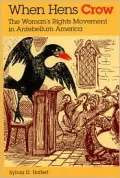
In 1852 the New York Daily Herald described leaders of the woman's rights movement as "hens that crow." Using speeches, pamphlets, newspaper reports, editorials, and personal papers, Hoffert discusses how ideology, language, and strategies of early woman's rights advocates influenced a new political culture grudgingly inclusive of women. She shows the impact of philosophies of republicanism, natural rights, utilitarianism, and the Scottish Common Sense School in helping activists move beyond the limits of Republican Motherhood and the ideals of domesticity and benevolence. When Hens Crow also illustrates the work of the penny press in spreading the demands of woman's rights advocates to a wide audience, establishing the competency of women to contribute to public discourse and public life.Editorials
Library Journal
Employing speeches, tracts, pamphlets, newspaper reports, and editorials, Hoffert (women's history, Southwest Missouri State Univ.) explores how the pre-Civil War feminists publicly challenged men to a fight and thus forced them to acknowledge that women could enter the fields dominated by men.Book Details
Published
October 25, 1995
Publisher
Bloomington : Indiana University Press, c1995.
Pages
166
Format
Hardcover
ISBN
9780253328809