
United States History - 20th Century - 1901 to 1945, United States History - 19th Century - General & Miscellaneous, Executive Branch, U.S. - Political Biography, U.S. Politics - History
Log in to track your reading progress.
Overview
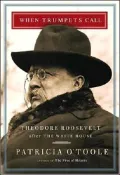
From the author of the acclaimed Five of Hearts, this highly praised, spell-binding biography is the definitive account of TR's final decade, the most poignant — and in some ways, the most heroic — years of his extraordinary life. Drawn from a wealth of new materials, this is a remarkable portrait of a remarkable man.
Editorials
Janet Maslin
Roosevelt's devotion to his family emerges most clearly in the last part of the book, which describes his children's patriotic activities during World War I. The patriarch's frustration at being sidelined during such critical times is just one more in the string of indignities that befell him after his presidency. But Roosevelt's fighting spirit is captured in all its indefatigability here. To think of him as a failure in these later years, Ms. O'Toole writes, "would be to miss the point of the man."— The New York Times
Publishers Weekly
Numerous books-most notably Joseph L. Gardner's classic Departing Glory: Theodore Roosevelt as Ex-President-have addressed TR's 10 years of postpresidential life (1909-1919), which will also be the focus of the final installment in Edmund Morris's monumental three-volume biography. While coming up with little in the way of news, O'Toole (The Five of Hearts: An Intimate Portrait of Henry Adams and His Friends) is straightforward and accurate, satisfactorily narrating the well-worn facts of TR's growing dissatisfaction with his hand-chosen successor, William Howard Taft; his own failed bid to return to the White House as a progressive candidate in 1912, and his nearly fatal 1914 exploration of Brazil's River of Doubt. Equally workmanlike is O'Toole's sketching of TR's clashes with the Wilson administration and the drama of his sending four sons off to war (three returned). It's in her consideration of the 50-year-old TR's safari through British East Africa in 1909 that O'Toole takes her narrative beyond earlier accounts via access to the previously unavailable papers of Sir Alfred Pease, TR's host for a significant slice of time in today's Kenya. One wishes she'd expanded her consideration of TR's adventures with Pease and others and made this into a more vivid and interesting book than this one. 16 pages of b&w photos not seen by PW. Agent, Elaine Markson. (Mar.) Copyright 2005 Reed Business Information.Library Journal
Like an athlete unable to quit the sport that brought fame and self-fulfillment, Theodore Roosevelt found his return to private life after the presidency a disaster for him, his family, and the Republican Party. His two greatest errors were renouncing another presidential bid after completing McKinley's second term and then winning the 1904 election on his own and his running as a third-party candidate in 1912, which split the Republican Party and delivered the presidency to Woodrow Wilson. O'Toole (The Five of Hearts: An Intimate Portrait of Henry Adams and Friends) adeptly revisits this story, uncovering previously unexploited material and presenting a fuller and more sympathetic account. O'Toole presents Roosevelt as that rare individual who fulfilled himself through the political arena, finding that life without political power made him feel useless. She makes a convincing argument that TR's attacks on the Wilson administration during World War I were both merited and ultimately vindicated. While this story has been told before (see, e.g., Joseph L. Gardner's Departing Glory), O'Toole has written the definitive account of TR's postpresidential years. TR's broad popularity as a subject, the centennial of his presidency, and the accessibility of the author's writing make this an essential purchase for general and academic collections.-William D. Pederson, Louisiana State Univ., Shreveport Copyright 2005 Reed Business Information.Kirkus Reviews
Teddy Roosevelt did not go gently into the good night of postpresidential politics; rather, writes O'Toole, he made as much of a stir out of office as in it, and "the last decade of his life would blind him to distinctions between the public interest and his own."No law forbade Roosevelt's running for a third term in 1908, notes O'Toole (Money and Morals in America, 1998), but custom prevented it; indeed, the two-term limit had been "a sacred American precept" since the time of George Washington, who warned that a president entrenched in office too long would become a tyrant. Roosevelt was no tyrant, but he liked exercising power at his sole discretion, as when he gave a customs post to poet Edward Arlington Robinson for the good of literature, a job that Robinson had to be reminded to go to long enough to collect his paycheck. When he left office, Roosevelt had difficulty adjusting to his newfound inability to issue ukases; he consoled himself by going to Kenya and shooting everything he saw-his party bagged 512 African animals, including 8 elephants-and then returning to New York to conspire against his sometime friend and successor William Howard Taft, who protested that Roosevelt's called-for regulatory and welfare reforms would require rewriting the Constitution. Roosevelt responded, ere long, by accusing Taft of "violating every canon of human ordinary decency and fair dealing," which caused poor Taft to break down in tears. But Taft had the last laugh when Roosevelt was denied the Republican nomination in 1912, after which it was Democrat Woodrow Wilson's turn to rule-and to withstand Roosevelt's petitions, including the demand that he be given a colonel's commission when the USentered WWI. Roosevelt's response on being denied was characteristic: "Our rulers were supple and adroit," he thundered, quoting the Bible, "but they were not mighty of soul."A mighty-and mighty trying-soul, very capably and vigorously scrutinized here.Book Details
Published
March 1, 2005
Publisher
New York : Simon & Schuster, c2005.
Pages
512
Format
Hardcover
ISBN
9780684864778