
Fiction, Fiction Subjects, Peoples & Cultures - Fiction
Log in to track your reading progress.
Overview
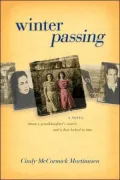
Darby Evans stands before her grandmother's bed, wondering why the dying older woman calls the name of a stranger—Tatianna. A young woman searches for clues to her grandmother's love and legacy lost during World War II. A beautiful story of ultimate love and the passing of a sixty-year-old winter of sorrow.Editorials
Roberta Blair
More than a romance, Winter Passing is a tribute to mothers and daughters, and the love that binds them. It is testimony to the enduring nature of true love.— Romantic Times
Publishers Weekly -
This Christian novel by first-time author Martinusen attempts to treat an ambitious subject--the legacy of the Holocaust experienced by survivors and their descendants--but the work suffers from an implausible plot involving a family treasure lost during the Nazi occupation of Austria. The narrative opens with young California photographer Darby Evans grieving over her beloved grandmother Celia's death from cancer. She is puzzled by her grandmother's last request: for Darby to return to Austria and seek out the truth about Tatianna, Celia's best friend from childhood. Darby discovers that Tatianna had sacrificed herself during the war by posing as the half-Jewish Celia to allow Celia to escape the Nazis. In her friend's stead, Tatianna first was tortured for information about the whereabouts of family jewelry and precious coins, and then executed in the Mauthausen concentration camp. Darby pieces together the past and begins to understand the moral complexities of the war as she meets ordinary people who did what they thought they needed to do in order to save their own families. These glimpses of moral ambiguity are the most sophisticated moments in the book, but they are offset by a formulaic romantic story line, an unconvincing scene in which Darby confronts Tatianna's executioner and the inevitable kidnapping-and-treasure-digging sequence at the novel's end. The clich d plot dilutes the novel's strengths, which include its well-described Austrian setting (featuring, for example, a mouth-watering history of the Sacher torte) and its willingness to grapple with deep questions of theodicy. (Sept.) Copyright 2000 Cahners Business Information.|Library Journal
Darby Evans knew that her Jewish grandmother Celia Muller, who survived the Holocaust, was obsessed with recovering the family's inheritance. Still, Celia's deathbed prayer to "Give Tatianna back her name!" completely confuses Darby. Her search takes Darby to Austria to see Brant Collins, who helps Holocaust survivors recover family treasures. He knows that Darby's grandmother can't possibly be Celia Muller, since records show that Celia died in front of a firing squad in 1941. Darby pushes on, and as the mystery of Tatianna comes to light, she discovers a 60-year-old secret that some people are willing to kill for, and the revelation rekindles her faith in the Lord. Poignant and almost unbearably tragic, this debut novel crosses religious lines as the horror of the Holocaust is relived in the memories of three generations. Simply one of the strongest novels this year, this blends past, present, and future with compelling writing that captures the heart, imagination, and soul in one fell swoop. Recommend to the Thoenes' fans.Book Details
Published
December 1, 2000
Publisher
Tyndale House Publishers
Pages
400
Format
Paperback
ISBN
9780842319065