
Businesspersons & Entrepreneurs - Biography, Publishers - News & Media Biography, E-Commerce - History & Culture, Computer Industry - Networks, Publishers & Booksellers - Biography, Editors, Publishers, Agents, & Booksellers - Literary Biography, Media -
Available on Bookshop
Write a review
Books.org participates in affiliate programs including Bookshop.org and the Amazon Services LLC Associates Program. We may earn a commission from qualifying purchases made through links on this page, at no additional cost to you.
Log in to track your reading progress.
Overview
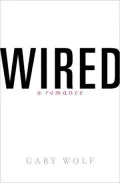
The Electric Kool-Aid Acid Test for our own age, the story of a dreamer who turned American media upside down—and suffered the consequencesLouis Rossetto had no money, no home, no job. Five years later he owned the hottest magazine in America and was poised to become an international tycoon, with America’s most powerful financiers by his side.
Rossetto was the founder and editor of Wired, whose hyperactive Day-Glo pages proclaimed that every American institution was obsolete. Instantly, Wired, was everywhere—on television, passed around the halls of Congress, displayed in the office of the president of the United States. Wired,’s headquarters in San Francisco became a pilgrimage site for everybody who wanted to be at the white-hot center of the digital revolution. Not since the early days of Jann Wenner and Rolling Stone had anybody so brilliantly channeled the enthusiasms of his era.
But this was only the beginning. Wired cast an uncanny spell, creating a feedback loop that grew stunningly out of control. Wired,’s online site, HotWired, designed and sold the first banner advertisements for the World Wide Web, unleashing a commercial frenzy. Wired, reached for empire, with a book-publishing company, a broadcast division, and foreign editions all over the globe. But as the market’s enthusiasm outstripped the limits of reason, Rossetto faced a battle over the fate of Wired that would prove the ultimate test of his radical ideas.
Gary Wolf, one of Wired,’s most popular writers, takes no prisoners in this insider’s account, telling a story that is alternately thrilling, hilarious, heartbreaking, and absurd. Now that bumper stickers read-ing please god–just one more bubble have been sighted on the highways of California, Wired—A Romance goes beyond the dot.com clichés and paints a deeply affecting portrait of the boom.
From the Hardcover edition.
Synopsis
The Electric Kool-Aid Acid Test for our own age, the story of a dreamer who turned American media upside down—and suffered the consequences Louis Rossetto had no money, no home, no job. Five years later he owned the hottest magazine in America and was poised to become an international tycoon, with America’s most powerful financiers by his side. Rossetto was the founder and editor of Wired, whose hyperactive Day-Glo pages proclaimed that every American institution was obsolete. Instantly, Wired, was everywhere—on television, passed around the halls of Congress, displayed in the office of the president of the United States. Wired,’s headquarters in San Francisco became a pilgrimage site for everybody who wanted to be at the white-hot center of the digital revolution. Not since the early days of Jann Wenner and Rolling Stone had anybody so brilliantly channeled the enthusiasms of his era. But this was only the beginning. Wired cast an uncanny spell, creating a feedback loop that grew stunningly out of control. Wired,’s online site, HotWired, designed and sold the first banner advertisements for the World Wide Web, unleashing a commercial frenzy. Wired, reached for empire, with a book-publishing company, a broadcast division, and foreign editions all over the globe. But as the market’s enthusiasm outstripped the limits of reason, Rossetto faced a battle over the fate of Wired that would prove the ultimate test of his radical ideas. Gary Wolf, one of Wired,’s most popular writers, takes no prisoners in this insider’s account, telling a story that is alternately thrilling, hilarious, heartbreaking, and absurd. Now that bumper stickers read-ing please god–just one more bubble have been sighted on the highways of California, Wired—A Romance goes beyond the dot.com clichés and paints a deeply affecting portrait of the boom.Editorials
The Los Angeles Times
If your memory of the last decade is a pixelated blur of dot-com schemes spawning countless millionaires, then revisiting the rise of the digital era through its most celebrated publication should bring events sharply back into perspective. In Wired: A Romance, Gary Wolf offers a studied rather than sensational journey through the detritus of the '90s techno explosion, the magazine's pivotal role in it and its maverick cast of characters. — Jackie BennionThe New York Times
Wired: A Romance is less a love story than a theological autopsy of a religion that flourished and went away in less than a decade. Things happened quickly for Wired -- remember ''Internet time''? At its height in the mid-90's, Wired could be found in the lobbies of venture capitalists, on the light tables of designers, underneath the coffee cups of computer geeks and in the middle of the only conversation that seemed to matter. It was, briefly, the coolest magazine on the planet. — David CarrThe Washington Post
Wolf writes about Wired with such grace and high spirits that I find it hard to imagine any fair-minded reader coming away unpersuaded that in its heyday the magazine -- a visionary monthly that promoted digital technology not merely as a technical marvel but as a genuine social, political and even spiritual revolution -- was a vastly important publishing phenomenon. — Tim CavanaughPublishers Weekly
As a staffer at Wired, the magazine that started and fueled Internet economy hype, Wolf watched the rise and fall of an era from his desk. And he took notes. His story, however, doesn't rise above the slew of boom-and-bust books; despite a few colorful details, much of it involves dull talk of stock options, money and control. Wolf follows Wired's founders, Louis Rossetto and Jane Metcalf, from their beginnings publishing European trade magazines to launching a wildly successful, influential magazine. The pair left Europe for San Francisco in the early 1990s to create "the mouthpiece of the digital revolution." Like most new businesses, Wired was launched with its founders' (here, especially Rossetto's) force-of-will, financial bootstrapping and an overwhelming sense of mission. In the early days, employees had to buy their own pens. "[Rossetto] was not just being frugal," Wolf writes. "The pens-or rather the absence of pens-had a meaning: hold on to your independence; do not get lazy; do not lose your identity; do not merge with the group." Indeed, Wired created a unique corporate culture, in which management brought employees to the hills north of San Francisco for a bit of media strategizing and pot smoking, and IPOs were printed in neon colors instead of the standard b&w format. Although not a tell-all, Wolf's story provides some gossipy tales of backstabbing, bruised egos, multimillion-dollar deals and steamy affairs. But as a romance, the story is bittersweet. Overspending and personality conflicts eventually forced the sale of Wired, albeit for a tidy profit. Like so many similar tales, what started as an attempt to change the world became an unseemly struggle for money and control. (On sale July 8) Forecast: Wolf's book, which would have made a great piece in San Francisco magazine but drags at book length, will be of interest only to those with ties to Wired. For general readers, the dot-com story may be over. Copyright 2003 Reed Business Information.Library Journal
Wolf, coauthor of Dumb Money and a contributor to Wired and other magazines, here chronicles the life of Wired founder Louis Rossetto, as well as his times, which happened to be the stock market "bubble years" of the 1990s. According to the author, "The story had, if no sole author, at least a preeminent champion. His name was Louis Rossetto and his platform was Wired." Wolf introduces us to the intriguing Rossetto and his partner (in business and personal life), Jane Metcalfe, who met in Europe in the 1980s and eventually returned to the United States to start Wired. The magazine's story is told against the backdrop of the Nineties bubble and its collapse in 2000. The market's rises, corrections, and fall directly affected operations at Wired, and readers are given an inside look at the magazine's headquarters. This is a readable and fascinating account of Rossetto and Metcalfe, their influential magazine, and the volatile times to which they belonged. Highly recommended for both public and academic libraries.-Lucy Heckman, St. John's Univ. Lib., Jamaica, NY Copyright 2003 Reed Business Information.Kirkus Reviews
Unconventional business saga about the founding of Wired magazine and its related online empire. Journalist Wolf, himself a Wired contributor, opens the story in 1985 with its dominant character, 35-year-old Louis Rossetto, living in Amsterdam and dreaming about starting a magazine that would capture not only the promise of online technology, but also the accompanying lifestyle. In Paris, Rossetto met Jane Metcalfe, another youngish American expatriate, who became part of his personal life and eventually his business partner. By the end of the ’80s, Rossetto and Metcalfe had worn out their welcome in Europe with both employers and social acquaintances; they decided to return to the US, hoping to raise money for a new magazine. The author devotes the first five chapters to the rootless wanderings of the oddly magnetic, ethereal Rossetto and the somewhat more realistic Metcalfe, chronicling every kick in the teeth they suffered before launching the first issue of Wired from a San Francisco workspace in 1993. The failures, told in excruciating detail and with oddly flat affect, pile on top of one another until the journey becomes extremely depressing. The Wired launch provides brief uplift, but Rossetto was so contrary with anybody who preached the conventional wisdom of the magazine business that soon the narrative is filled again with relentless contentiousness. Wolf knows his use of the word "romance" is unorthodox; he insists it’s appropriate because it hints at the supernatural, tracing "the effect of a fantastic idea—the idea that computers will make every existing authority obsolete—as it worked through and upon the man who conjured it up." Uneven, but the quirky charactersand the magazine’s skyrocket trajectory keep it compelling through the final page.Book Details
Published
July 8, 2003
Publisher
Random House Publishing Group
Pages
304
ISBN
9781588363046