
Education - General & Miscellaneous, Games, English Language Reference, Foreign Language Study Aids & Dictionaries, Writing
Log in to track your reading progress.
Overview
This book explores how writers from several different cultures learn to write in their academic settings, and how their writing practices interact with and contribute to their evolving identities as students and professionals in academic environments in higher education.Embedded in a theoretical framework of situated practice, the naturalistic case studies and literacy autobiographies include portrayals of undergraduate students and teachers, master's level students, doctoral students, young bilingual faculty, and established scholars, all of whom are struggling to understand their roles in ambiguously defined communities of academic writers.
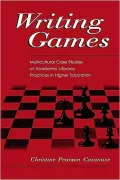
In addition to the notion of situated practice, the other powerful concept used as an interpretive framework is captured by the metaphor of "games"--a metaphor designed to emphasize that the practice of academic writing is shaped but not dictated by rules and conventions; that writing games consist of the practice of playing, not the rules themselves; and that writers have choices about whether and how to play.
Focusing on people rather than experiments, numbers, and abstractions, this interdisciplinary work draws on concepts and methods from narrative inquiry, qualitative anthropology and sociology, and case studies of academic literacy in the field of composition and rhetoric. The style of the book is accessible and reader friendly, eschewing highly technical insider language without dismissing complex issues. It has a multicultural focus in the sense that the people portrayed are from a number of different cultures within and outside North America. It is also a multivocal work: the author positions herself as both an insider and outsider and takes on the different voices of each; other voices that appear are those of her case study participants, and published authors and their case study participants. It is the author's hope that readers will find multiple ways to connect their own experiences with those of the writers the book portrays.
Synopsis
This book explores how writers from several different cultures learn to write in their academic settings, and how their writing practices interact with and contribute to their evolving identities as students and professionals in academic environments in higher education.Embedded in a theoretical framework of situated practice, the naturalistic case studies and literacy autobiographies include portrayals of undergraduate students and teachers, master's level students, doctoral students, young bilingual faculty, and established scholars, all of whom are struggling to understand their roles in ambiguously defined communities of academic writers.
In addition to the notion of situated practice, the other powerful concept used as an interpretive framework is captured by the metaphor of "games"--a metaphor designed to emphasize that the practice of academic writing is shaped but not dictated by rules and conventions; that writing games consist of the practice of playing, not the rules themselves; and that writers have choices about whether and how to play.
Focusing on people rather than experiments, numbers, and abstractions, this interdisciplinary work draws on concepts and methods from narrative inquiry, qualitative anthropology and sociology, and case studies of academic literacy in the field of composition and rhetoric. The style of the book is accessible and reader friendly, eschewing highly technical insider language without dismissing complex issues. It has a multicultural focus in the sense that the people portrayed are from a number of different cultures within and outside North America. It is also a multivocal work: the author positions herself as both an insider and outsider and takes on the different voices of each; other voices that appear are those of her case study participants, and published authors and their case study participants. It is the author's hope that readers will find multiple ways to connect their own experiences with those of the writers the book portrays.
Editorials
Booknews
Casanave (Keio U.) employs concepts and methods from a variety of disciplines, including narrative inquiry, qualitative anthropology, sociology, and case studies of academic literacy in the field of composition and rhetoric. The works of Bourdieu, Lave, Wenger, and Ortner are considered as the author develops the metaphor of academic writing "games." The text examines the ways in which writers from several different cultures learn to write in their academic settings, and the role their writing practices play in their evolving identities as students and professionals in higher education environments. The text contains case studies of a full range of academic levels, including undergraduate, masters and doctoral students, undergraduate faculty, young bilingual faculty, and established scholars. Annotation c. Book News, Inc., Portland, OR (booknews.com)Book Details
Published
January 1, 2002
Publisher
Taylor & Francis, Inc.
ISBN
9781410612366