
General & Miscellaneous Biography, Historical Biography
Log in to track your reading progress.
Editorials
Children's Literature
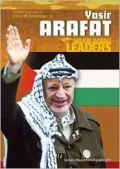
Yasir Arafat was born in Jerusalem or Cairo. No one is really sure and the enigma of his birth follows the Palestinian leader throughout his life. He grew up in a dysfunctional family and came of age just as Israel was created, leaving 1.3 million Palestinian refugees. He was a student leader protesting British operation of the Suez Canal but he soon created Al Fatah to work for an independent Palestinian state. The book is replete with details about the Palestinian independence movement, Arafat's growing leadership of that movement and the way it always seemed to be the playing field for animosities among other Arab nations. Most of Arafat's critical first speech before the United Nations in 1974 is recorded here, and there are numerous opportunities for students to discuss the paths taken or rejected by Arafat, Al Fatah and later the Palestine Liberation Organization (PLO). The story is well told and perhaps most compelling just because Arafat is such a mystery, characterized throughout his life as both freedom fighter and terrorist. The "Major World Leaders" series covers a wide range of leaders from Yasir Arafat and Menachem Begin to Jimmy Carter, George W. Bush, Vladimir Putin and Vicente Fox. The opening essay about leadership by noted historian Arthur Schlesinger is intellectually demanding, and unappealingly printed in small type with small margins. It would be valuable primarily for generating discussion or writing projects by very advanced students. 2003, Chelsea House Publishers,— Karen Leggett
School Library Journal
Gr 6-9-In a series foreword, Arthur Schlesinger establishes two tests of what constitutes "great leadership": whether leaders lead by force or by persuasion, and "the end for which power is sought." Judged by these two criteria, both Begin and Arafat as presented here fall far short of greatness (for different reasons). Though both of the authors poke occasional criticism at their subject, the overall tone of both books is laudatory. Brackett concentrates on Begin's reaction to the Holocaust, his involvement with Zionism in pre-Israeli Palestine, and his participation in Israeli politics until his resignation as prime minister in 1983. Williams traces Arafat's unhappy childhood in Egypt and later in Jerusalem; his gradual involvement with the Mufti of Palestine, who was granted asylum in Egypt after supporting Hitler in World War II; Arafat's leadership of al-Fatah and its eventual merger with the PLO; and his chairmanship of the Palestinian Authority. The book on Begin is the more cohesively written of the two, but each volume glosses over large areas of its subject's political life-the late 1960s and early 1970s of Begin's career and his postretirement life and the 1970s to 1990s in Arafat's life. Almost a whole chapter in Arafat is given over to large excerpts from his partisan speech to the U.N. in November 1974 and contains little contextual information for readers to judge the importance or accuracy of his comments. Each book has clear, color photos; a small map that is difficult to decipher; an incomplete index; and suggestions for further reading that list mainly adult books.-Jack Forman, Mesa College Library, San Diego Copyright 2003 Cahners Business Information.Book Details
Published
September 1, 2004
Publisher
Chelsea House Publishers
Pages
112
Format
Hardcover
ISBN
9780791069417