
United States History - Study & Teaching, Historians - Biography, Post-World War II American History - General & Miscellaneous
Log in to track your reading progress.
Overview
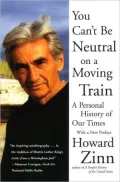
Acclaimed historian Howard Zinn has been at the center of the most important historical moments of the last thirty years, during which he has been admired both as a writer and as an important political and moral voice. Author of the epic A People's History of the United States, Zinn here applies his historian's skills to the remarkable life he himself has led. In this inspiring, personal book—which works both as memoir and as popular history of an era—Zinn brings to life more than thirty years of American social history by telling the stories behind a politically engaged life. Zinn grew up in the immigrant slums of Brooklyn and flew as a bombardier in World War II, and he writes about the ways both experiences helped shape a radical impulse, an opposition to war, and a passion for history. He writes about his first teaching job at Spelman College, where he worked with young civil rights activists including Alice Walker and Marian Wright Edelman. He paints vivid, portraits of key moments and people throughout the South in the early 1960s, where he was a chronicler and active ally of the civil rights movement. He talks about his days as a leading antiwar protester, going to Vietnam with Daniel Berrigan and testifying in his friend Daniel Ellsberg's Pentagon Papers trial. He recalls imprisonments for civil disobedience, fights for open debate in universities, his love of teaching. Running throughout this personal book is Zinn's charming, generous, engaged voice, as well as a message about history. You Can't Be Neutral on a Moving Train is Zinn's argument for hope—the stories of the people and events that inspire his faith in the possibility of historic change.Editorials
Publishers Weekly -
Noted left-wing historian Zinn (A People's History of the United States) believes that activism and education are inextricable, and his memoir illuminates a well-engaged life. Teaching at Atlanta's Spelman College in the early days of the civil rights movement, he found allies in principled students like Marian Wright (now Edelman) and budding writer Alice Walker. He advised SNCC in Selma, Ala. He volunteered to fight the Nazis but, after Hiroshima, developed a skeptical pacifism he further exercised as a passionate opponent of the Vietnam War. Zinn's narrative is oddly disjointed: not until late in the book does he recount his youth in the slums of Brooklyn, his discovery of Dickens, Marx and Steinbeck and his post-WW II years as a laborer and a 27-year-old college freshman. If Zinn is a bit Pollyannish, he's also inspirational, arguing that, because much has changed in history, "We can be surprised again. Indeed, we can do the surprising.'' (Sept.)Booknews
Zinn (political science, Boston U.) brings to life 30 years of American history by telling the stories behind his politically engaged life. He writes of his experiences in WWII, his work in the civil rights and anti-war movements, and his imprisonment for civil disobedience. Annotation c. Book News, Inc., Portland, OR (booknews.com)Colman McCarthy
A warmhearted memoir of a teacher who committed his politically engaged life to the belief that love is a command to action.—The Washington Post
From Barnes & Noble
The acclaimed author of A People's History of the United States brings to life more than 30 years of American social history by telling the stories behind his politically engaged life.Book Details
Published
November 15, 1995
Publisher
Boston : Beacon Press, c1994.
Pages
214
Format
Paperback
ISBN
9780807070598