
Fiction - Games & Activities, Fiction - Animals - Birds, Fiction - Emotions & Behaviors, Fiction - Schools & Friendship
Available on Bookshop
Write a review
Books.org participates in affiliate programs including Bookshop.org and the Amazon Services LLC Associates Program. We may earn a commission from qualifying purchases made through links on this page, at no additional cost to you.
Log in to track your reading progress.
Overview
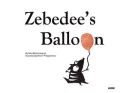
"Zebedee has got a balloon which he brings everywhere with him. But one
day the balloon disappears! Where is it? Zebedee wanders in the night in order to
find it. He is afraid, and feels lonely without his precious balloon. He hears a noise!
What is it? It is just the old owl who wants to reassure him. She goes and tries to
find the balloon with him. But each time they think they have found it, they meet
another animal ready to help Zebedee in his quest.
Will they finally find the balloon? Will Zebedee be all alone without it?
A beautiful story about friendship and trust."
Editorials
Publishers Weekly
French artist Philipponneau’s striking wood engravings are the centerpiece of this counting story; he revels in the textures and contrasts that the medium offers, and his folk art–like depictions of the night forest are handsome enough to stand on their own. The text, alas, falters. A small dog named Zebedee, heartbroken upon losing his cherished red balloon (which he refers to as “Ball”) meets a kindly owl who comforts him: “Together, as we search hard for Ball,/ You will make not one but ten friends in all!” Sure enough, two doves, three snails, and four worms join the search. At several junctures, Zebedee thinks he sees Ball, but it’s one disappointment after another as the red circles he and his new friends spot (the sole bits of color in the book) turn out to be strawberries, apples, and flowers; ultimately, Zebedee must admit that he’s never going to find Ball (“Dear little Ball, wherever you may be./ You can live your own life”). The rough-hewn artwork and thick matte paper stock are lovely, but the clumsy, saccharine translation is a letdown. Ages 4–up. (Mar.)School Library Journal
PreS-Gr 1—Translating poetry from one language to another is a tricky business at best, and this French into English attempt is not up to the task. Zebedee, a small unidentifiable forest creature, is attached to a red balloon, which is described as being "as soft as cotton wool." When it drifts away, Zebedee is devastated. He sees a series of red round objects in the night, but each one turns out to be something else—the eyes of an owl, flowers, strawberries, apples, etc. With each sighting, he makes a new friend, who then assists in the search. Zebedee never does find "Ball," but by the end he has 10 new pals. The repeated rhyme, "Together, as we search hard for Ball,/you will make not one but ten friends in all!" does not scan well, and there are numerous forced rhymes, such as "together" with "over there," "imagine" with "comfort him," "found" with "amount," etc. The woodcut illustrations are dark and dreary, and the page layout can be confusing as objects that are not naturally white appear that way to differentiate them from the night sky. A marginal purchase.—Grace Oliff, Ann Blanche Smith School, Hillsdale, NJKirkus Reviews
Heavy contrivance and clumsy language sink this French tale of a small, indeterminate animal searching for a lost toy. Frightened and desolate after the prized red balloon he calls "Ball" sails off into the night, Zebedee gets help tracking it down from an owl. He predicts that, "as we search hard for Ball, / You will make not one but ten friends in all!" In Philipponneau's informally carved wood engravings the dark forest is anything but comforting, being eerily lit first by the owl's huge red eyes, then by a similarly glowing thicket of red flowers, a bunch of wild strawberries and the apples in a tree. None turns out to be Ball, but the lights lead in succession (with the "ten friends" line repeated each time) to two doves, three snails and four worms. The narrator abruptly concludes that Ball can live its own life, because with ten newfound buddies "everything is alright [sic]. / Zebedee is no longer afraid of the night." Some readers may be weirded out by the art; more will find Zebedee's sudden change of heart forced and artificial. (Picture book. 5-7)Book Details
Published
December 16, 2011
Publisher
Auzou Publishing
Pages
40
Format
Hardcover
ISBN
9782733819425