
Language Arts - English Language, Forests & Trees, Animal Habitats, Exotic Animals, Alphabet
Available on Bookshop
Write a review
Books.org participates in affiliate programs including Bookshop.org and the Amazon Services LLC Associates Program. We may earn a commission from qualifying purchases made through links on this page, at no additional cost to you.
Log in to track your reading progress.
Synopsis
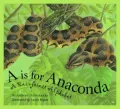
At one time rainforests covered about 14% of the earth's surface; now they're reduced to just 6%. As home to some of the most diverse plant and animal species ever known, this decline has grave implications for both man and animal kingdoms. A is for Anaconda: A Rainforest Alphabet explores the world's rainforests as it explains their important role and showcases their wonders. Nature writer Anthony Fredericks gives an A-Z tour of the many facets and fascinating facts of these tropical environments. Exotic inhabitants including the basilisk lizard and kinkajou are highlighted, along with explanations of forest structure such as understory and canopy. In A is for Anaconda young readers will meet the many endangered plant and animal species, understand the progression of a food web, and appreciate why the rainforest has been called the "world's medicine chest."Anthony D. (Tony) Fredericks is a frequent traveler to the rainforests of Hawaii and Central America. He is the author of many nature and animal books for children, including several award-winning titles. When not visiting classrooms across the country, Tony teaches education courses at York College in York, PA. Laura Regan is nationally known for her rich, contemporary style of painting and her many award-winning children's books featuring exotic flora and fauna. Her artwork has been used to raise funds for many wildlife organizations. Laura lives in the Bay Area in California.Editorials
Children's Literature -
For each letter of the alphabet, this informational book provides a word of interest from the rainforest. From countries (B is for Brazil) to critters (W is for Walking Stick), science and social studies topics are covered. Each letter is accompanied by a rhyming stanza about the main word of interest as well as a fact-filled sidebar. Sidebars cover specifics like the ranges, sizes and habits of animals. A second word of interest is offered in the sidebar for most letters; for example, R is for Rainforest but also Red-eyed Tree Frogs. Concepts explored include: epiphytes, local cultures, food web, nocturnal, canopy, medicines, and species-specific information. The book ends with Z is for Zero and a sidebar with staggering statistics about the continuing loss of the rainforest acreage and species. Although the illustration accompanying that text depicts a girl and adult planting a tree, it is a shame that the text does not leave the young reader with any indication of hope or positive actions to take. Ten simple review questions are provided at the back. Teaching material to accompany the book is available online at the publisher's website. The materials include "what if" extension questions, language arts worksheets on adjectives and compound words, mapping, math, food chain diagrams, etc. Reviewer: Heather L. MontgomeryBook Details
Published
April 30, 2009
Publisher
Sleeping Bear Press
Pages
40
Format
Hardcover
ISBN
9781585363179