
Children - Science & Technology, Children - Art & Architecture
Log in to track your reading progress.
Overview
Technology is essential to our everyday lives. Without it, we would not have houses, clothes, or toys, and we would communicate only through speech. Finding out how technology is used to create many things in our world is fascinating!
The Technology Behind series investigates intriguing and exciting Technology phenomena. Each book takes one Technology topic and answers 13 questions in an easy-to-read and engaging way.
Have you ever wondered...
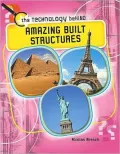
How did the Egyptians build the pyramids?
Which is the tallest building in the world?
Why was the Eiffel Tower built?
Discover the answers to these and many other questions in this book!
Editorials
Children's Literature -
Have you ever wondered about the purpose of Stonehenge? Who carved Mount Rushmore? What Brazil's Christ the Redeemer statue is made of? How the Hoover Dam was built? These and nine other built structures are featured in the pages of this book. Author Nicholas Brasch takes on the Eiffel Tower, the pyramids of Egypt, the Statue of Liberty, the Gateway Arch, the EuroTunnel, the London Eye, the world's tallest skyscraper, and more. He focuses two pages of text on each structure, exploring an intriguing aspect such as how it was built or why it was constructed. Some authorial or editorial decisions are perplexing. For example, the Leaning Tower of Pisa would seem a natural subject for this sort of question-based book. What child, upon hearing of it, hasn't wondered has it always leaned, or will it ever fall? Also, it's surprising that there is no blurb in the Mount Rushmore about the Crazy Horse statue, also in South Dakota. Or that there is no acknowledgement of the Mayan pyramids alongside the mention of Egyptian pyramids. Like the other books in "The Technology Behind" series, this book features a colorful format and abundance of information. Illustrations are full-color photographs or drawings, and these appear on every page. Vocabulary words are printed in bold throughout the text, with definitions provided in "Word Watch" blocks on each page. "Web Watch" blocks on each page provide between one and three web addresses of resources with additional information; unfortunately, several are from commercial websites. Particularly in light of its focus on historical structures, this book might benefit more from a list of print resources rather than online references. All in all, this is a basic introduction to several specific structures. Reviewer: Heidi Hauser GreenBook Details
Published
January 1, 2011
Publisher
Black Rabbit Books
Pages
32
Format
Hardcover
ISBN
9781599205656