
Individual Buildings & Designs - General & Miscellaneous, Building Types - General & Miscellaneous Architecture, Ancient Architecture - General & Miscellaneous, Ancient Egyptian Sites, Tombs, & Ruins, African Architecture
Log in to track your reading progress.
Overview
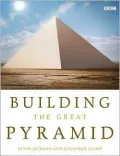
The Great Pyramid of Khufu is the oldest of the Seven Wonders of the World and the only one still standing. No building on earth has inspired more speculation than the Great Pyramid, or raised so many questions. Equipped with only basic tools, how were Ancient Egyptian builders able to achieve such an extraordinary degree of accuracy in its construction? How were stones, some weighing as much as 40 tons, hauled into position so precisely? What was life like for the conscripted laborers who built it, and how long did it take them to complete their task? Building the Great Pyramid traces the history of the exploration of the Giza site, from the earliest Greek and Roman travelers, through the investigations of the Arabian prince Abdullah AlMamun in the ninth century AD, to the work of Athanasius Kircher and John Greaves eight hundred years later. The origins of Egyptology are also examined: the exhaustive surveys carried out under Napoleon following the French invasion of Egypt in 1798, Jean-Francois Champollion's cracking of the hieroglyphic "code," and the work of scholars such as Auguste Mariette and Sir William Flinders Petrie in the nineteenth and twentieth centuries. Links with Freemasonry and the effects of mass tourism are also explored. Finally the book considers the less orthodox theories of pyramidologists and looks at how the Great Pyramid has become a magnet for all manner of charlatans, heretics and cranks, among them the mystic "Madame" Helena Blavatsky and the self-styled "Great Beast" Aleister Crowley -- who claimed to have spent his honeymoon inside the tomb.Editorials
Publishers Weekly
It is 481 feet tall, 756 feet long at its base, and consists of 2.3 million blocks of stone weighing two and a half tons each. One of the mysteries of the Great Pyramid of Giza is: How did the ancient Egyptians, with their primitive technology, build it? Writer Jackson (The Oxford Book of Money) and Stamp, producer of the TV program Pyramid, assert that the builders were young peasants conscripted into the pharaoh's service-and that, though Herodotus said 100,000 men were needed-in fact, probably no more than 4,000 men completed the job. Realistic computer images show workers cutting stone in the quarry, hauling the huge stones up a ramp and setting them in place. Other color and duotone archival images reveal the inside of the pyramid, including the king's burial chamber and the low-ceilinged main entranceway. The authors put the pyramid in context, discussing ancient Egyptian beliefs about death and the afterlife in general, and the funeral rites for the pharaoh in particular. Among the more striking images here is a photo of the mummy of Ramses II, so hardened it appears to be made of stone. This is an excellent beginning for anyone interested in the culture of ancient Egypt and the pyramids. (Mar.) Copyright 2003 Reed Business Information.Children's Literature
The building of the pyramids has long fascinated scholars and laymen alike. Jackson and Stamp intelligently and comprehensively examine the design and process of building the pyramid at Giza. Readers cannot help but be awed at the accuracy of the simple tool used to determine the exact axis on which the temple was aligned. Of special interest is the chapter on the daily life of those conscripted to build the pyramid ("covee" labor), which lies to rest the notion that the work was performed by slaves. The study of the exterior and interior of these monuments reveals much about the ancient Egyptian's belief in an afterlife and their burial rituals. There is information on the early discoveries of the Napoleonic era that gave rise to the science of Egyptology. For the curious and those who like obscure facts, there is a fascinating chapter that exposes all manner of cranks, charlatans, and mystics often referred to by the serious as "pyamidiots". Thoroughly researched, engagingly written with archival and reenactment photos, both the expert and neophyte will find a wealth of information here. 2003, Firefly Books,— Beverley Fahey
Booklist -
The easy-to-digest text and the many illustrations give the book appeal to a wide range of readers.E-Streams -
Nicely done, easy to read and interestingly illustrated with a wide variety of materials... An entertaining book.Book Details
Published
February 1, 2003
Publisher
Firefly Books Ltd
Pages
192
Format
Hardcover
ISBN
9781552977217