
Art - General & Miscellaneous, Architecture, Buildings & Construction
Log in to track your reading progress.
Editorials
Children's Literature
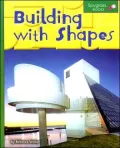
Look out the window and what shapes do you see? A square house? A triangle roof? Circle windows? In Building with Shapes, young readers are encouraged to examine their environments for familiar shapes. Building on basic ideas of squares, triangles and circles, the author introduces children to the complementary 3-D versions of cubes, pyramids, domes, cylinders, cones and arches. By contrasting familiar structures such as football stadiums and skyscrapers with famous world landmarks such as the Colosseum and the leaning tower of Pisa, the author teaches readers that building shapes have a very long history. Bright, vivid photographs accompany a simple text, making this an excellent read-aloud. Building with Shapes provides relevant connections between basic math concepts and real-world applications. 2005, Compass Point Books, Ages 4 to 7.—Leah Hanson
School Library Journal
K-Gr 2-In the first book, basic shapes are identified, described, and graphically presented via full-color photographs of buildings and sites. Some of the pictures of these structures, such as the Leaning Tower of Pisa and the Roman Colosseum, contain details that interfere with a clear presentation of the shape. It's unfortunate that a simple outline of it is not included within the context of the picture. Computers attempts to provide a simple introduction to technology, but the concepts and pictures about early machines are too complex for this age group. In addition, ending a sentence identifying the founder of IBM without adding a description of the company assumes too much prior knowledge. The discussion of how computers evolved is better, though a diagram of how they link in the Internet might have been more informative than a photo of a father and daughter on a keyboard. The photo of a "wearable" computer will also raise questions not answered in the text. Understanding Differences portrays random concepts and photos of people, while describing cultural manners and celebrations. References are not always identified, as in "In some countries, though, cows are sacred." Or, "People don't always use good manners. Sometimes people whistle during sports games-." The combination of random facts and arrangements, lack of detail, and use of some complex photos results in books that do not meet the requirements of their targeted audience.-Phyllis M. Simon, Bay Shore School District, NY Copyright 2005 Reed Business Information.Book Details
Published
September 1, 2004
Publisher
Capstone Pr Inc
Pages
24
Format
Paperback
ISBN
9780756510558