
United States - 19th Century - History, United States - Slavery & Abolitionism - History, Presidents of the U.S.A. - Biography, United States - 19th Century - Civil War - History, United States - Patriotism, Politics & Government - United States
Log in to track your reading progress.
Synopsis
Looks at the political and moral issues that caused President Abraham Lincoln to issue the Emancipation Proclamation, the 1863 document that freed many slaves, and at the immediate and long-term consequences of his action.Editorials
Children's Literature
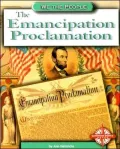
On New Year's Day, 1863, President Abraham Lincoln declared that "all persons held as slaves...are, and henceforward shall be, free." The Emancipation Proclamation was a "powerful promise of changes to come." Ann Heinrichs explains how the proclamation broadened the focus of the Civil War from re-uniting the country to ending slavery. Even for young readers, however, there should be more explanation of why the proclamation did not free slaves in border states and why "even people who were against slavery were unhappy about the proclamation." But there is valuable discussion of the excitement caused by the proclamation among African Americans then and now, as well as interesting details such as the origin of Juneteenth celebrations. The proclamation was not announced in Texas until it was read aloud by a Union general on June 19, 1863 in Galveston, and Texas' Juneteenth celebration soon became a festival of freedom all over the country. There is also an excellent group of interviews and photos of freed slaves, recalling their early days of slavery and freedom. There is a brief glossary, index, timeline and resource list in this series, which pulls significant historical events out of the textbook and gives them life and color of their own. Other books in the "We the People" series address the Alamo, the Battle of Gettysburg, California Missions, the Great Depression, Plymouth Colony, the Trail of Tears and the Statue of Liberty. 2002, Compass Point Books,— Karen Leggett
School Library Journal
Gr 5-8 Accessible texts, each with 9 or 10 short chapters, are packed with information, and include some details that will be new to students. For example, in Emancipation, mention of Lincoln's meticulous attention to detail and his insistence on a minor change in the document hours before its delivery provide fascinating insight into the significance of the Proclamation and the nature of the president. In addition, photographs of several former slaves along with a discussion of their lives after emancipation are provided. The information and inviting layouts will capture the interest of report writers and may even draw in reluctant researchers. Each volume is primarily illustrated with captioned color reproductions, but there are also black-and-white and color photographs and archival maps. These titles are more visually appealing and contain more facts than Brendan January's The Emancipation Proclamation (1997) and Gail Sakurai's The Louisiana Purchase (1998, both Children's). However, for depth of material and illustrations, Rhoda Blumberg's What's the Deal? Jefferson, Napoleon and the Louisiana Purchase (National Geographic, 1998) would be the preferred choice on that topic. -Dona J. Helmer, College Gate School Library, Anchorage, AK Copyright 2002 Cahners Business Information.Book Details
Published
January 1, 2002
Publisher
Capstone Press
Pages
48
Format
Paperback
ISBN
9780756509415