
Tibet History
Available on Bookshop
Write a review
Books.org participates in affiliate programs including Bookshop.org and the Amazon Services LLC Associates Program. We may earn a commission from qualifying purchases made through links on this page, at no additional cost to you.
Log in to track your reading progress.
Overview
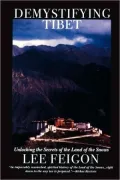
This authoritative view of the history and culture of Tibet comes at a time when this ancient land is in danger of losing its identity and culture under Chinese rule. In a compact narrative account, Lee Feigon describes Tibet's long and independent history, which belies Chinese claims to hegemony over the Tibetan people. Beginning in the seventh century with the origins of the Tibetan state, Tibetans have borrowed cultural and political forms from their neighbors, including China and India, but have always developed them in their own distinct manner. Tibet has in fact at times ruled vast portions of China, India, Nepal, Central Asia, and even the Middle East. As Tibetans assimilated Buddhist ideals, they gradually cultivated the powerful and magical religious aura that has given birth to legends of Shangri-la. Tracing this history through Mongol and Manchu rule in China, the advent of nineteenth-century Western imperialism, and the radical and sometimes racist policies of Communist China, which have aimed to transform Tibet, Feigon shows how Tibet's grand history has produced its present-day culture, and how the future of that culture now lies largely in China's hands.Synopsis
The author of China Rising here describes Tibet's long and independent history, focusing on its politics and culture, and shows how its future now lies largely in China's hands. An impeccably researched, spirited history of the forces that shaped today's Tibet, right down to the way tea is prepared. --Kirkus Reviews
Invaluable on many fronts...important in its documentation of the damage.
Editorials
Booklist
Invaluable on many fronts...important in its documentation of the damage.Ala Booklist
Invaluable on many fronts...important in its documentation of the damage.Invaluable on many fronts...important in its documentation of the damage.
Publishers Weekly -
For many Westerners, Tibet is the land of Shangri-la, the Big Yeti, the Dalai Lama and the snowy Himalayas and, at present, a country under Chinese rule. This dense, scholarly book offers a more realistic portrait of the vast, complex religious state, which is bigger than Europe and has a history of influence and entanglement in East Asian affairs. Feigon (China Rising: The Meaning of Tiananmen), a history professor at Colby College in Maine, is at pains to contradict the Chinese claim to it as an historically integral part of China. Instead, he presents Tibet as a distinct race, culture and sovereign state. To do so, he examines minutely the Chinese-Tibetan relationship. Although his strong bias is often obtrusive, the scholarship of this comprehensive study supports it. He gives a fine account of the country's history, government, politics, geology, language, religion and customs. Especially vivid is his picture of present-day Lhasa, permeated by the odor of yak oil, dominated by the Dalai Lama's stunning Potala Palace, its streets filled with pilgrims, tourists, wild dogs and despised Chinese. (Jan.)Feigon (East Asian studies and history, Colby College) unveils the country behind the myth, locating Tibet's origins, history, and its controversial relationship with China. He deconstructs the images and realities of Tibetan life, its relationship with the Mongols and Manchus, 19th century Western imperialism, and the imposed communist and racist polices of China. The author's intelligent and sensitive study creates a human reality from the exotic stereotypes, and underlines the cultural and political threats to Tibet's very existence. Annotation c. Book News, Inc., Portland, OR (booknews.com)
Book Details
Published
March 1, 1998
Publisher
Dee, Ivan R. Publisher
Pages
256
Format
Paperback
ISBN
9781566631969