
Linguistics & Semiotics, Nature, American & Canadian Literature, General & Miscellaneous Literary Criticism, Historiography, United States History - 18th Century - General & Miscellaneous, Natural History
Available on Bookshop
Write a review
Books.org participates in affiliate programs including Bookshop.org and the Amazon Services LLC Associates Program. We may earn a commission from qualifying purchases made through links on this page, at no additional cost to you.
Log in to track your reading progress.
Overview
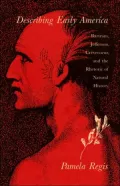
Embedded in the rhetoric of some of the key writings on early America Regis finds the concepts and presuppositions of natural history. Describing Early America examines Bartram's Travels, Jefferson's Notes on the State of Virginia, and Crevecoeur's Letters from an American Farmer - texts that previously have been viewed as belles lettres - and shows how these writings employ recognized scientific methods in recording observations of the new world. Focusing on the descriptions of plant, animal, and human life in the new territories, Regis reestablishes the scientific framework of these texts and offers a reading "based on the lost paradigm of the science of natural history." According to Regis, writers observing the new world extended the Linnaean system developed for classifying plants to their descriptive narratives of the land, its animals, and its inhabitants, including the native populations and blacks. These descriptions, Regis argues, ultimately legitimized in scientific terms a view of the natural order of the world, expressed in the idea of the Great Chain of Being, which in a hierarchy places "savages" below "Homo sapiens europaeus." Such historyless and faceless descriptions resulted in a portrayal of America as a static, timeless tableau awaiting occupation. Regis considers natural history in its original context, examines the rhetoric of natural history writing - its organization, sentences, and diction - and links the genre to early descriptive narrative through an analysis of Travels, Notes, and Letters. In her persuasive rediscovery of an intellectual tradition, she offers a fresh view of the way in which such texts were conceived and drafted and how they contributed to the self-definition of America.Editorials
Booknews
Examines texts from 18th-century America, which have been considered belles-lettres, and finds in them scientific methods and systematic observations of a now extinct discipline, natural history. Shows how descriptions of plant, animal, and human life adhered to earlier principles, and how they influenced later definitions of America. Annotation c. Book News, Inc., Portland, OR (booknews.com)Book Details
Published
December 31, 1992
Publisher
DeKalb : Northern Illinois University Press, 1992.
Pages
203
Format
Library Binding
ISBN
9780875801667