
Nature, American & Canadian Literature, Genres & Literary Forms, General & Miscellaneous Literary Criticism, Historiography, Natural History
Available on Bookshop
Write a review
Books.org participates in affiliate programs including Bookshop.org and the Amazon Services LLC Associates Program. We may earn a commission from qualifying purchases made through links on this page, at no additional cost to you.
Log in to track your reading progress.
Overview
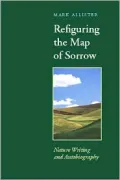
Allister (English, St. Olaf College) examines works by six authors which fuse autobiography, literary nonfiction, and environmental literature into a distinct form of "grief narrative." Each of these authors "... begins in depression that shadows grief; each comes to put an end to depression, to move through mourning, by turning observations and stories of the external world into a narrative that heals." The six works featured are Sue Hubbell's A Country Year, Terry Tempest Williams' Refuge, Bill Barich's Laughing in the Hills, William Least Heat-Moons' Blue Highways, Peter Matthiessen's The Snow Leopard, and Gretel Ehrlich's The Solace of Open Spaces. Annotation c. Book News, Inc., Portland, OR (booknews.com)Editorials
Choice
This balanced contribution to ecocriticism examines autobiographical works that focus on grief, the mourning process, and the interaction of the human world with the world of nature. Comprising close readings of Terry Tempest Williams's Refuge (1991), Bill Barich's Laughing in the Hills(1980), Gretel Ehrlich's The Solace of Open Spaces (1985), Peter Mathiessen's The Snow Leopard (1978), Sue Hubbell's A Country Year (1986), and William Least Moon Heat's Blue Highways (1982), the volume offers critical insight into autobiography as Allister examines theoretical and artistic implications. Allister is interested in how these authors work through their grief, and he finds that they do so by extending themselves into the natural world and into the built environment. He applies an ecological term, ecotone, to the works he studies, defining them as border cases in which major perspectives of the human and natural worlds meet. In this regard, this work follows in the critical footsteps of centrally located ecocriticism as defined in The Ecocriticism Reader: Landmarks in Literary Ecology,
ed. by Cheryll Glotfelty and Harold Fromm (1996): the 'desire to articulate the intricate webs of relations in the natural world — one foot in literature and the other on land.' Highly recommended for upper-division undergraduates through faculty.
Book Details
Published
November 30, 2001
Publisher
Charlottesville ; University Press of Virginia, 2001.
Pages
199
Format
Hardcover
ISBN
9780813920641